Americanism Redux: Your Today, November 19, On The Journey to the American Founding, 250 Years Ago, In 1776
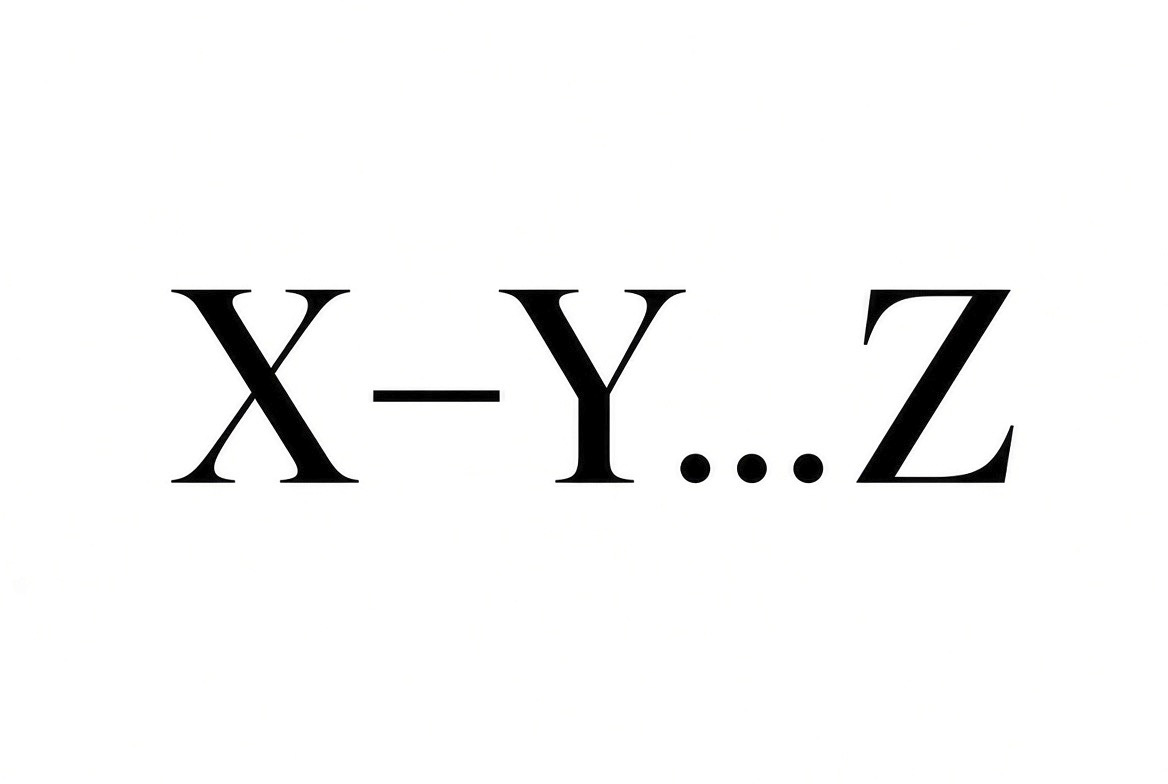
Simple as simple gets. Hardly anything simpler when you look at it.
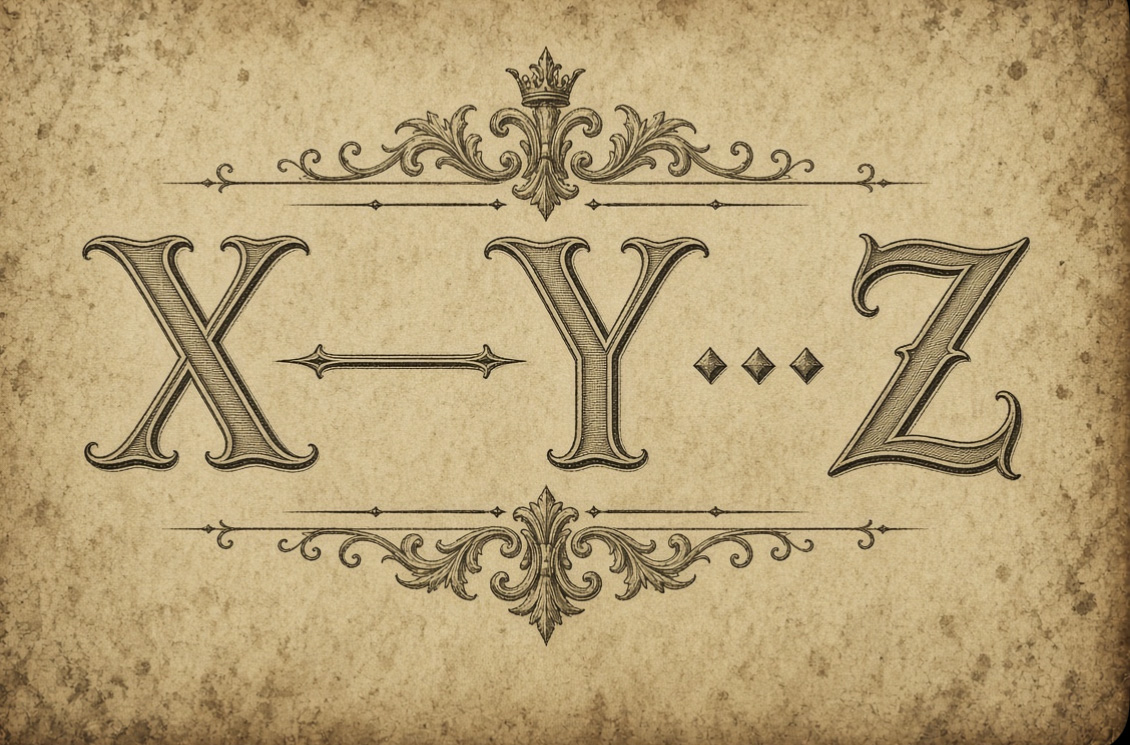
X—Y…Z.
“X” is you deciding, your decision.
“—” time elapsed. Short, long, whatever, the time since deciding.
“Y” is the result, not reaction and not response, but the result from your decision, for you and for others.
“…” another elapsing of time, open toward the future but with an end in mind.
“Z” is the next, the end reached, the future halted as the present restarts.
This is the today of 250 years ago and you are in Americanism Redux.
* * * * * * *
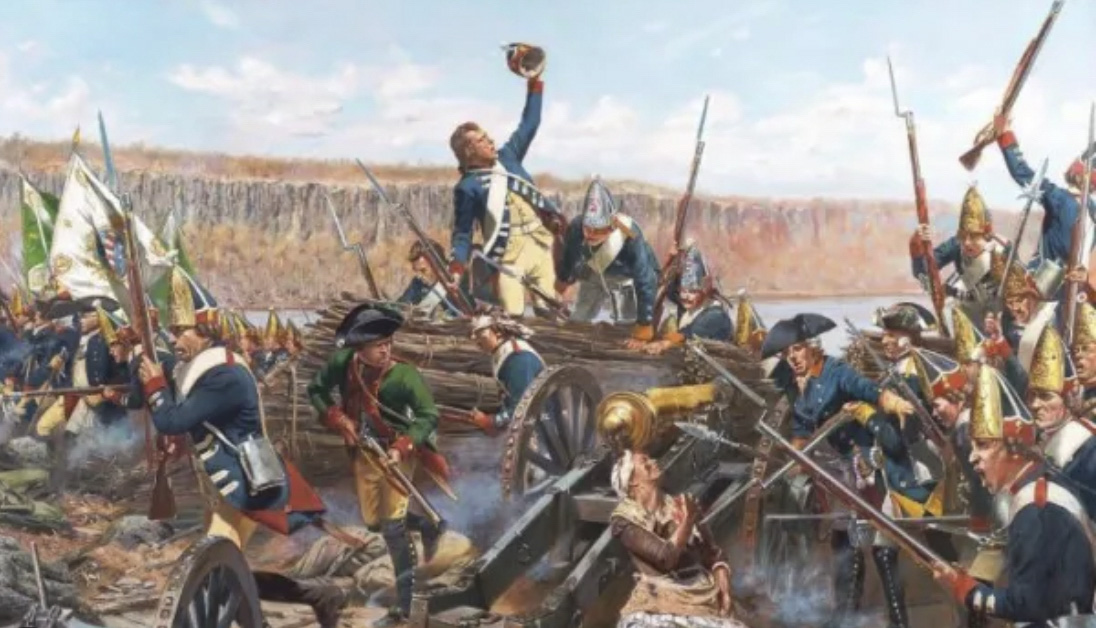
(site of the tragedy)
Three days ago, Nathanael Greene’s decision was to hold Fort Washington with his nearly 3,000 men. His decision, no one else’s. Given the leeway by his boss, General George Washington, who also advised at the same time against doing it, Greene made the final call. Hold the fort.
Pass the word.
A day later then, and two days ago now, life said okay: you got it. The result came via the enemy, the British and their German allies who assaulted the fort from various directions.
Every one of those nearly 3,000 Americans was wounded, killed, or captured as prisoners of war. (Life as future puts it on the scale of Pearl Harbor in 1941 and 9/11 in 2001). And of those captured, many of them are, as of today, November 19, forty-eight hours into what will become a hellish submersion in British prison ships docked in enemy-held New York harbor.
The nearly 3,000 Americans had stayed in the fort, followed orders, and done the duty assigned them.
Paid the price.
* * * * * * *
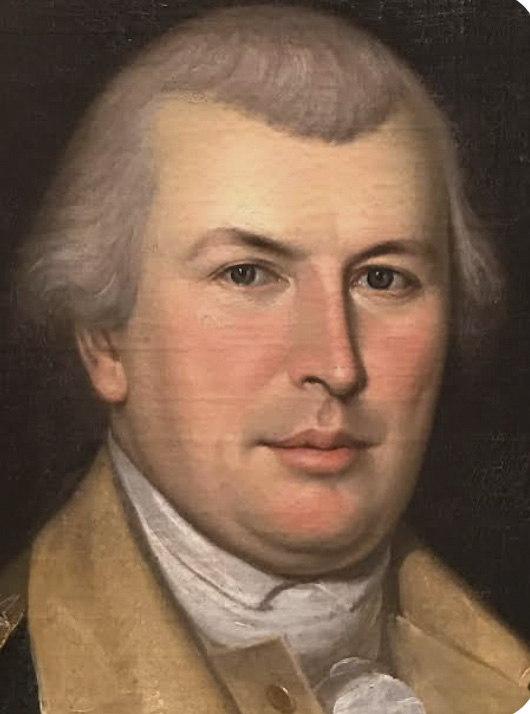
(Greene)
Today, Nathanael Greene agonizes. “I am mad, vexed, sick, and sorry,” writes Greene to a friend. He stops his quill pen at the end of this line.
Such a long, long way from several days earlier when he waxed eloquently over “my maxims of war” acquired in his weeks of wartime experience.
He continues, “Never did I need the consoling voice of a friend more than now. Happy should I be to see you. This is a most terrible event: its consequences are justly to be dreaded. Pray, what is said upon the occasion? A line from you will be very acceptable.”
Greene seeks to create a response to his decision and its outcome. He’s waiting on a reply from his comrade, colleague, and dear friend Henry Knox, in charge of the Continental artillery used by Washington’s force. He hopes Knox agrees with an earlier portion of the letter: Greene’s speculation that an unfinished outpost near the fort was a reason for the disaster. Greene knows that more reactions are afoot, though he’s unaware that an anonymous letter is circulating which asserts the fort was too large for the number of men defending it. Unsaid is one conclusion: an experienced commander would have known that.
As the dead are buried, the wounded are tended, and the imprisoned are marched away, Greene lowers his pen.
* * * * * * *
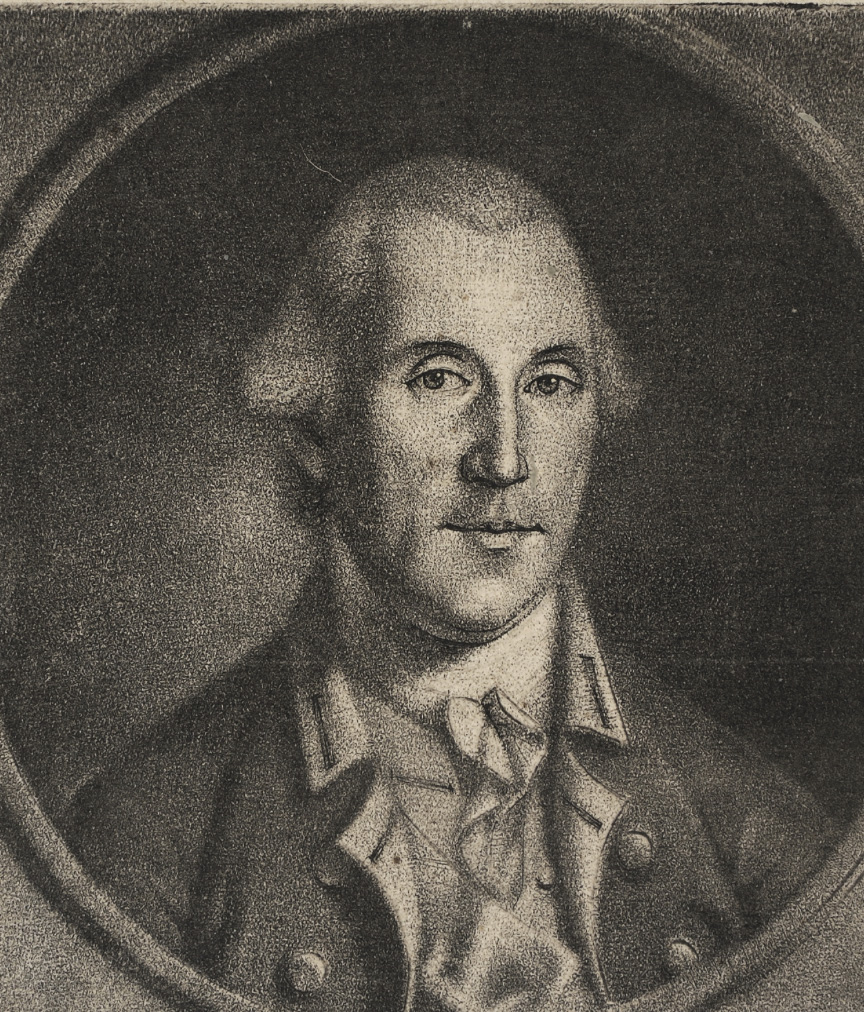
(Washington)
George Washington has consciously tried to keep his team involved. He makes decisions with their involvement, often setting aside his own judgment in favor of theirs. Suggest, yes, offer his strong inclination, yes again, but on more than one occasion he’s relented and accepted what the group, or an energetic faction of the group, has chosen over his preference.
Including this week, when he delegated to Nathanael Greene the final decision on Fort Washington.
And with it, he’s got a disaster on his hands, a calamity, a defeat so overwhelming that he needs a miracle just to regain the good old days of “setback.”
Hour after hour, Washington rides his horse from one temporary camp to the next, oversees creek and river crossings, strides to meetings, answers questions, calms fears, dictates commands, dictates reports, writes personal letters, reads letters and reports, sleeps and eats when he can, and tries to project an outer appearance of steadiness, calmness, and resolve.
Three days ago he told Greene to “govern himself by circumstances, and to retain or evacuate the post as he should think best.” Said another way, if you decide to move, you can. Since then, however, he sees a basic factor that’s been distorted into something different: “The importance of the North (Hudson) River,” he tells the governor of Connecticut, “and the sanguine wishes of all to prevent the Enemy from possessing it have been the cause of this unhappy Catastrophe.” Don’t let a thing—natural or man-made—tie us down. This commander of the Continental Army communicates to the president of the Continental Congress that a fort on the west bank of the Hudson River “has become of no importance by the loss of the other, or not so material as to employ a force for its defenses.” Finally and privately to a brother, he refers to having positively “spun the Campaign out…” a fortnight ago but becoming “wearied almost to death with the retrograde Motions of things…” in his negative present condition. Bit by bit, Washington continues to conceive of a “moving Army” where motion is priority, movement is paramount, and mobility is power.
The hours are awful and the journey is hard.
* * * * * * *

(precious commodity)
One of those writings by Washington travels east via horseback to Connecticut (to Governor Jonathan Trumbull Sr.).
The public’s mood there is restless, shown by a troubling essay that Ebenezer Watson prints in his newspaper, the Hartford Courant. The author is Reverend Isaac Foster, who chooses to disguise himself under the pen name of “Philo-Patria”. The essayist sees a disturbing trend getting worse: over the past six months, salt is becoming scarce. This staple of daily life is skyrocketing in price and nothing done by people in power seems to reverse the trend. Foster is left with one conclusion—the moral character of people is weak. He invokes Biblical passages to explain the immorality behind marketplace decisions to sell a disappearing household resource at outrageous prices. Left unchecked, Foster predicts that the Union cause’s spiritual side is at stake. If God destroyed a sinful Jerusalem, a sinful Union will be next.
What would it mean if Foster’s right, and what would THAT mean if Washington’s army had been forced to go east rather than west of the Hudson River? What then? Is this how Foster’s prediction might come true?
* * * * * * *
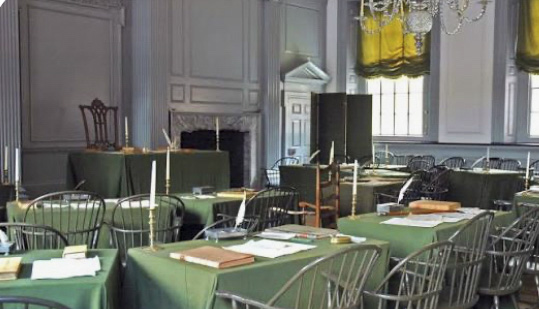
(rough space)
Reverberations from the disaster at Fort Washington hit a central region of the Union already in a turmoil all its own. Philadelphia shakes and rattles from a civic earthquake.
In the Pennsylvania State House, gaps within the Continental Congress are splitting into chasms and uncrossable canyons. Delegates are angry with each other—not in disagreement but rather in open hostility—over raising soldiers for the newly designed 88-battalion Continental Army. The center of the pressure is money; states like Massachusetts are raising the offered wages to new soldiers at levels above what other states are able or willing to match. The assumption had been that the Union and Nation’s new 88 battalions would have one pay scale. That no longer seems to be true. Southern delegates like North Carolina’s William Hooper identify northern delegates, Elbridge Gerry of Massachusetts prominent among them, as drivers of the divide. Curses and personal insults are increasingly the vocabulary of the delegates. The upshot is that attendance and participation in the Continental Congress has dropped to nine states, a threat to the ability to conduct daily business in the organizational heart of the Union and Nation.
Meanwhile, the community surrounding Pennsylvania State House shows similar signs of unraveling cohesion. Three jump out. First, newspapers in the town collaborate to ration dwindling supplies of paper so information about a feared British invasion via New Jersey can be updated to a terrified public. The paper supply is also vital to continue offering ways people upset over the new constitution can express themselves; “Union” and “The Considerate Freeman” are only two of several recurring essayists arguing over controversial features of the constitution. Second, calls—often in printed newspaper form—are issued by the Pennsylvania Council of Safety: militia must converge on Philadelphia to save the city from the war’s threat, a fate everyone seems to think Washington’s army has proven unable to stop. Third, Pennsylvania’s collapse of confidence in the Continental Army worsens by the hour as word arrives of Nathanael Greene’s last-minute order to transfer to the doomed Fort Washington four battalions of Pennsylvania men who had joined the Flying Camp back in the summer.
* * * * * * *

(Paine)
One man, not long a Pennsylvanian in fact, has new insights into this week as a moment. He’s Thomas Paine, as much the American Immigrant (from England) as Pennsylvanian American, and he’s part of the staff with Nathanael Greene and his force now stumbling into New Jersey.
Paine’s part of the slog (“almost endless”, according to Greene), hauling south everything that isn’t nailed down. It was back in January when he published “Common Sense”; oh, to remember those golden words about the good reasons why a separated Union will thrash the British (Redcoats are now reading “Common Sense” and calling Paine “the scoundrel”). So here is what a “moving Army” looks like: horses and cattle plod over cold ground, rutted ground shakes the wagon wheels, barrels and crates squeak at every bounce, men with tired and worried faces walk slowly. Soldiers and animals together pass through someone’s field, along someone’s fence, near someone’s church, and approach someone’s village or town. And on they go.
British soldiers who enter the abandoned Fort Lee will find those and read those left-behind copies of “Common Sense”. That the bloke who wrote the damned thing is a “scoundrel” is the consensus of the Redcoats.
* * * * * * *
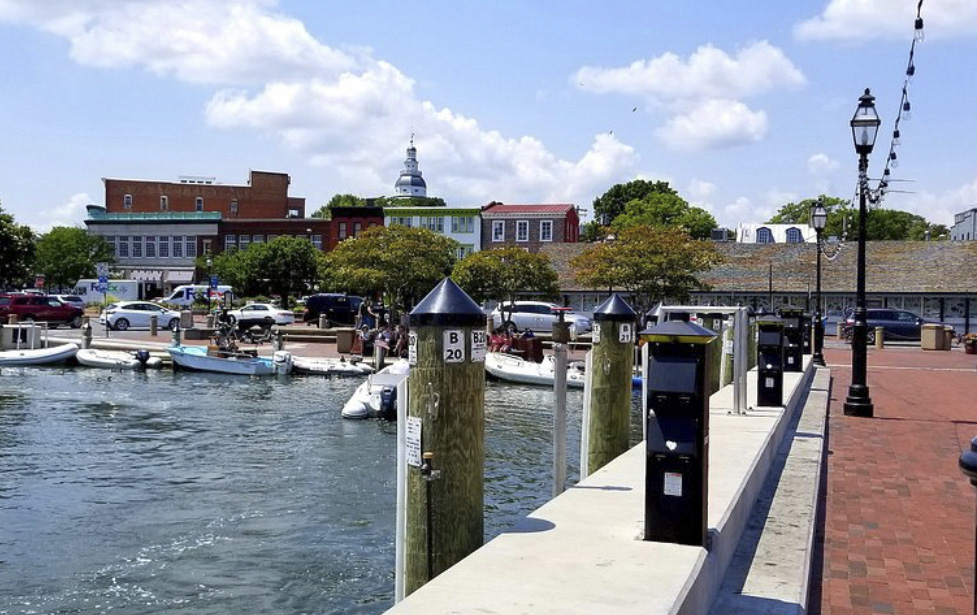
(Annapolis)
In Annapolis, Maryland, two announcements promote a sense of gain and progress for supporters of the Union and Nation. One is the availability of the full contents of the constitution adopted last week; if you know how to read and can find a copy of a local newspaper, every word of the final document is there for the learning. The other is a notice released by the state’s Council of Safety—the British are returning to Canada after Continental Army and militia blocked their southern invasion along Lake Champlain. Marylanders can savor both an orderly early transition to a state constitution and a semi-victory in the war. The larger problems of the wider moment seem to be elsewhere, outside Maryland.
* * * * * * *

(Dixon)
John Dixon, a former mayor of Williamsburg and current militia officer, is one of two family-based partners wrestling with the challenge of keeping a media operation viable in the Virginia capital. Dixon has been grappling for months with his co-owner and nephew, William Hunter, over their deep disagreements about the Union and Nation; Dixon supports and Hunter opposes. Having tamed that division, Dixon copes with having lost to a rival printer the main printing contract of the new Virginia government. Adding to the difficulties is a shortage of paper, elevating the price of Dixon and Hunter’s basic business material. And in an attempt to pull a monetized rabbit out of the magician’s hat, Dixon has chosen to call in all outstanding debts AND require higher fees for the printing of “controversial” copy.
Dixon hopes to capitalize on recent momentum in the development of several state constitutions. He changes the masthead, replacing a Latin phrase affirming free speech and a free press with a new Virginian-American statement: a nearly exact reprint of Article 12 of the Virginia Declaration of Rights, a proclamation of press freedom.
The masthead is only the beginning. Dixon knows he needs new content to attract readers in the marketplace. He’s not done yet.
Also
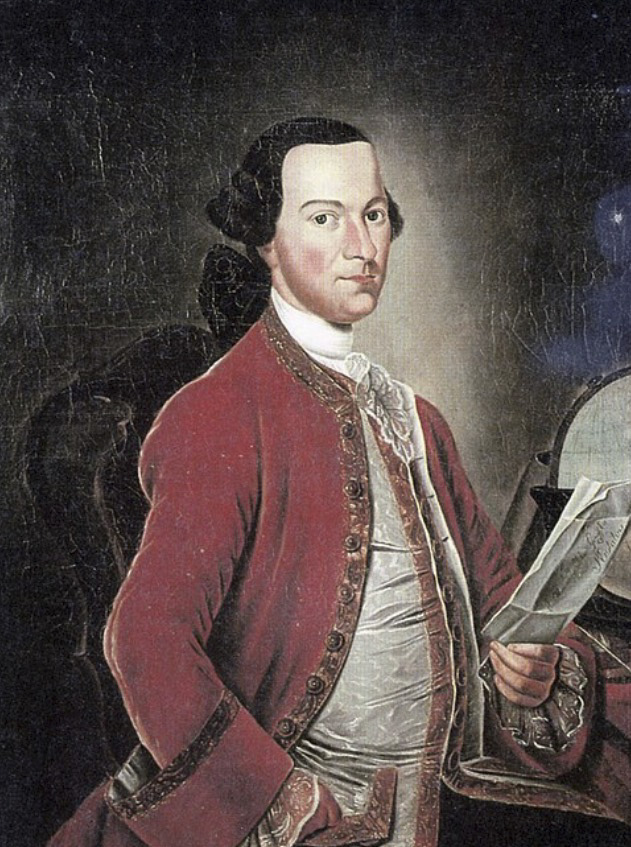
(De Graaff)
He saw the look, paused for a moment, and then gave the order.
And from the first second of the first echo, it was a controversial sound. He knew it.
Here’s the chain of events that required perhaps a minute to unfold.
Johannes de Graaff, Governor of the Dutch island of St. Eustatius in the Caribbean Sea, had seen his subordinate and military commander of the seaside fort, Abraham Ravene, catch his eye. The commander looked right at the governor as if to say: “what do you want me to do?”
The quizzical look pertained to an American warship, the Andrew Doria, which had just blasted a ceremonious round of artillery fire from its position offshore. It’s a gesture from the vessel of one sovereign nation to a port possessed by another sovereign nation—a formal “hello, may we proceed?” Its echo had hardly faded when the governor, returning the gaze of the commander, nodded, a physical expression of “yes, go ahead and answer with our ceremonial blast-response”.
Governor de Graaff knows the stakes. Isn’t this, with Dutch governor’s go-ahead head-nod for the artillery reply, a foreign nation’s formal recognition of the sovereignty of the United States? Doesn’t that risk a war between Holland and Great Britain?
The second blast echoes over the rocks and water.
Another shot heard ’round the world.
For You Now
Man, oh man. We’ve just gone through a ton of reality from right now, 250 years ago. Maybe I’m crazy but it feels a lot more “right now” than it does “250 years ago”.
X is your decision. Some quantity of time passes, represented by the “—” in my layout in the opening of this entry. Y is the result, no spin, no massaging, just straight-on pure result. X—Y. And then, very purposefully, I chose to use an ellipsis, the “…”, and joined it to Z. It embodies BOTH the future after the result AND the future’s possession of the effect on you and others; make no mistake, in the effect, there’s always the others. In addition, the “…Z” further captures the truth that the result precedes the new present, the new current, the new moment of now for you. And on, and on, and on we go. This is your leadership.
Permit me a few quick thoughts from the entry that might link with your leadership one day in the “X—Y…Z” layout. You could recognize something familiar in the points below.
Greene needs his friend, and he needs some better understanding of the impact of his result on his reputation. Washington’s mind is turning over and over and over a new kind of reality to help him operate from day to day. Two existential crises are converging—the Continental Army’s and the Continental Congress’s—and intensifying the convergence, if that’s even possible to imagine, is the geographic nature of a looming crushing calamity, Philadelphia (no jab intended, Eagles fans). Whether they know it or not, Paine and Dixon, sharing a loose connection in the media industry, prepare to do their best as they see it in whatever future is rushing toward them.
And their best, like yours, can have a deep impact in the flow of one layout to the next.
Suggestion
Take a moment to consider: can you find a story of yours in the “X—Y…Z” layout?

(Your River)





Speak Your Mind
You must be logged in to post a comment.