Americanism Redux
September 3, your today, on the journey to the American Founding, 250 years ago, in 1776

That thing you couldn’t imagine? The furthest, farthest, most mind-blowing thing that just wouldn’t be part of your day-to-day life?
Guess what. Yeah.
Now you can’t get away from it.
Today, September 3, 250 years ago.

* * * * * * *

Today, wife Abigail reminds husband John that she’s spent the last three days with him. Three full days, a wonderful three days. Not really.
There’s those pesky three hundred miles that stand between her at their Adams home in Braintree, Massachusetts and him at his Adams workplace in Pennsylvania State House in Philadelphia, Pennsylvania.
She couldn’t have imagined how prevalent those three hundred miles would be in their relationship.
Abigail’s reminder to John is in her letter that she just finished writing, sealing, and sending to Philadelphia. She tells him that it perfectly describes what is was like to close herself off with his letters over the past three days when her work in child-rearing, farming, house operations, home schooling, cooking, healthcare, home repair, and workforce management have all been done for the time.
Those letters, in her hands, her thoughts—it’s like they’re together despite this massive war and overwhelming crisis and awful three hundred miles.
* * * * * * *

(marked the trail)
13-year old Jemima Boone is in Boonesborough along the Kentucky River, about a thousand miles from Abigail Adams. Jemima is still recovering from the ordeal of having been captured and kidnapped by Hanging Maw, leader of a joint team of Cherokee and Shawnee Natives, who saw the girl as a bargaining chip in the red-hot guerrilla war now raging in the Ohio valley and Appalachian Mountains. She and two other girls did everything they could to slow down their kidnappers and leave a trail for family who tracked and pursued their assailants, breaking sticks, trampling over bushes, kicking over rocks. Finally rescued, Jemima and her friends are back now at her family’s village-fort. The nights are dark and the days have frightening sounds but, hour by hour, Jemima’s getting calmer. She’s noticing the long, intense looks from 23-year old Flanders Callaway, another resident of Boonesborough. Soon, they’ll marry and over a lifetime will have nineteen children together. In a different century, she’ll inspire a novel by James Fenimore Cooper, which in a another different century, inspires a film featuring Daniel Day-Lewis and the tale of a girl he rescues.
And none of this had ever entered Jemima’s consciousness as how things would be. Impossible to imagine.
* * * * * * *
(45 more to go)
Dig deep enough into the moments of Abigail’s reminder and Jemima’s recovery and you’ll find the war. Without it, there’ no need to remind and no need to recover.
40-year old Abraham Boyd agrees. He’s got a family and about a hundred acres of land in Prince George’s County, Maryland. Loves his wife, their kids, their home. But. He’s staring at setting it all aside in order to do what he thinks absolutely MUST be done: collect fifty or so neighbors—men, aged-men, or boy-men—to go with him into the “Flying Camp” that is supposed to defend the mid-Atlantic states from British invasion that for the time being is in New York City. Boyd informs the “Maryland Constitutional Convention” of his decision and seeks formal approval. Setting aside their debates on the new state constitution, the delegates today hear his offer read aloud in the beautiful Maryland State House. The decision by Abraham Boyd, and his family, interrupts arguments over legislative powers, representation, the role of judges, taxation, and all the other stuff of governmental design. No one in the room had predicted they’d be here creating their own government as part of the Union or listening to the request from a little-known man of Prince George’s County.
* * * * * * *

(smoke and wind)
Maryland’s Convention will also receive a separate formal request for another direction. Today, Continental Congress President (Preside/nt) John Hancock finishes a statement that he’ll send to the Maryland State House. He’s begging Maryland’s convention to send as many soldiers as they have to New York City to reinforce the weakened and endangered Continental Army. Leave nothing undone, Hancock implores Maryland’s convention members, “Everything is at Stake; our Religion, our Liberty, the Peace and Happiness of Posterity, are the Grand Objects in Dispute…”
One of Hancock’s colleagues in the Continental Congress, Benjamin Franklin, holds an outlook of different texture. Franklin is confident “our growing Country can bear considerable Losses, and recover them, so that a Defeat on our part will not be any means occasion our giving up the Cause…(and) in another Year our People throughout the Continent will be better armed and better disciplined, as most of them will have some experience of a Camp Life and actual Service.”
Hancock sees smoke in the moment, and Franklin sees wind in the long run. Both are right and both are responding to nothing they anticipated.
* * * * * * *

Delegates of the Continental Congress come to a difficult decision today. In light of the disastrous loss to the British in the Battle of Long Island, it’s possible that Washington’s Continental Army will have to evacuate New York City. The delegates agree that it would be morally wrong for Washington to burn the city as a way of denying the British control of a major functioning port and community stronghold. Their advice to the commanding general: let the city stand.
The delegates further recommend that those members they’ve designated as the “Board of War”—John Adams, Benjamin Harrison, Edward Rutledge, Roger Sherman, and James Wilson—take on the challenge of drafting plans for the next significant military campaign. Only Wilson has led a unit in the field or in battlefield action. With a northern New York army and a southern New York army struggling to push back enemy invaders, the group faces a gigantic task.
Only slightly less gigantic and unimaginable is having to define the basis of Continental currency. And the Continental Congress now has a draft report, complete with tables, data, and analysis, to guide determinations of how much gold and silver should comprise the foundation of new currency. Thomas Jefferson—on his way back to Monticello with his enslaved servant Robert Hemings—has helped with the draft. A key conclusion: continue to use the Spanish dollar as a unit of value.
The range astonishes. War plans, saving a city, defining percentages of precious metal in paper money. From a ruckus over sunken tea chests to this, every hourglass of falling sand in Pennsylvania State House tracks the latest thing no one expected to decide.
* * * * * * *

(the reaction to Sullivan)
And now, with unimaginability reaching new extremes, there’s this: former New Hampshire delegate, existing Continental Army General, and, wait for it, currently paroled prisoner-of-war John Sullivan is at the Pennsylvania State House. Captured by Redcoats in the calamitous battlefield defeat last week on Long Island, Sullivan is a human message-board, sent by British Admiral Lord Richard Howe to speak words dictated by the Redcoat commander. Howe, repeats Sullivan in remarks he’s memorized, laments the recent violence and is “very desirous of an accommodation with America, without any more bloodshed.” Within minutes, Sullivan’s involvement as a device as well as the words he delivers spark an uproar, outcry, and backlash within the Continental Congress.
The war is so much more than battles and musket balls.
* * * * * * *

It sure as hell is.
War is bread, for one thing, and, incredibly to General George Washington, most officers in the Continental Army have been telling their soldiers they only need to have a two-day ration of bread with them at any given time. Washington has to order officers directly that three days is the minimum and, in an attempt to shame them, reminds them that no one acted this stupidly in the last war, the French and Indian War. It’s unimaginable to him that this lesson still has to be taught.
* * * * * * *

Sometimes the hardest lesson to learn is to unlearn a lesson learned long ago. No lesson was more deeply learned among many people in the American Union and encoded onto the American Nation than the dangers of a standing army, its soldiers and its commanders whose only job and profession was war. A standing army had armed power and unless somehow restrained, would use it for their own purposes, in war and non-war. They lusted after, thirsted for, and salivated over the possession of ever-greater power. Trust them at your peril.
Which makes the long letter written this week by General George Washington and sent to Continental Congress President John Hancock practically unimaginable. And yet, he wrote and sent it as new truth.
Washington states that volunteer militia have proven poor defenders and their shameful behavior has infected the entire army. The cause of Union, he asserts, cannot survive unless a permanent, standing army is created. The time is now. It’s a standing army or nothing at all. The Continental Congress, Washington declares, must act on this new lesson of the war.
* * * * * * *
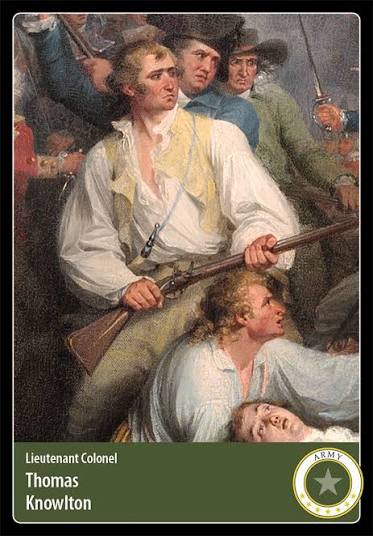
Washington wants Hancock and the other delegates to begin imagining the need to act swiftly on this new truth. But he’s also failing to imagine a further truth that is quietly unfolding in front of him.
The sole point now is to save his beaten army. To do so, he ordered four days ago the full-scale evacuation of Long Island from its surrounded position. A timely nighttime fog helped the escape of his 9,000 remaining men across the East River to New York City. His escape is the vital move.
One of Washington’s core subordinates, John Morin Scott warns him the same encirclement and entrapment is happening again to his forces in New York City. You must order the men to escape again. Escape as another vital move.
Meanwhile, Colonel Henry Beekman Livingston writes to Washington and recommends that Livingston’s small force could “harass” the enemy on Long Island and elsewhere. Beekman believes small, hit-and-run skirmishes by units filled with anyone who can fire a gun could drain British will. They won’t win large, frontal, and full-on battles but they can prevent enemy control of communities and the countryside.
Escape. Harassment. Death by a thousand cuts. Is it an imaginable path to victory when the eyes are seeing the outline of a standing army?
* * * * * * *
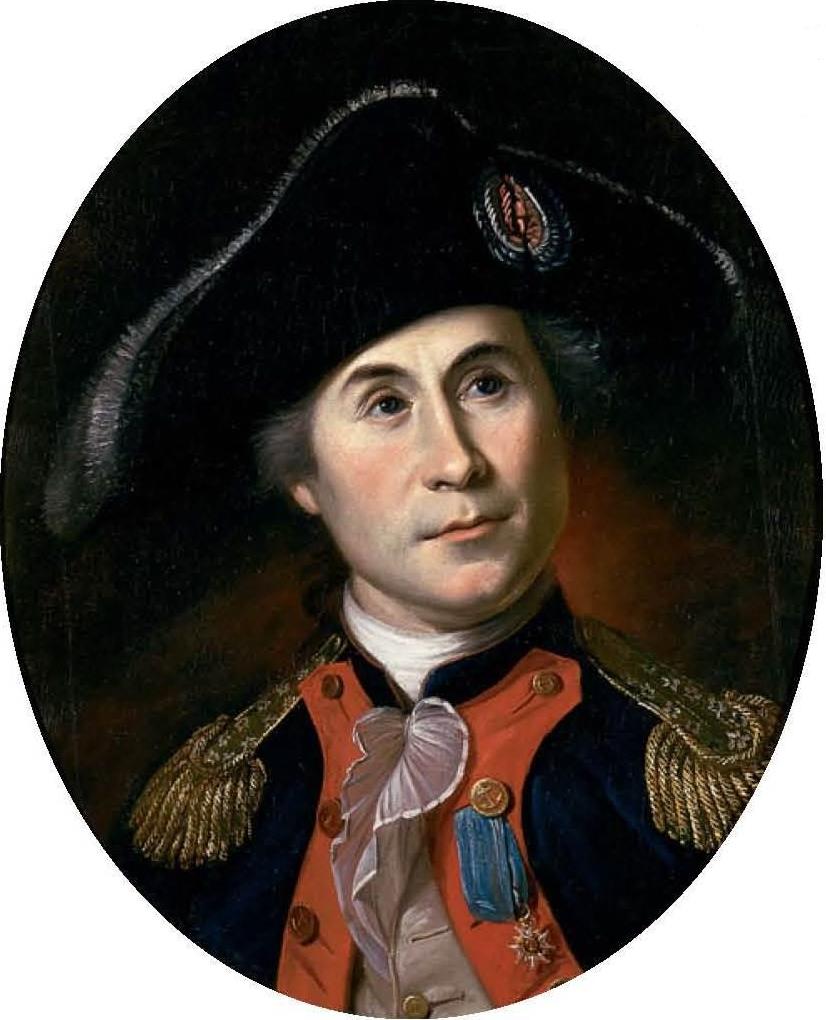
(JPJ)
He’s writing and speaking his name as John Paul Jones. Scottish-born, somewhere along the line in the last couple of years he added one of those names; there’s not much agreement as to which name is the add-on because it depends on who you ask. John Paul. Paul Jones. And now, John Paul Jones.
He’s a Continental Navy captain of the Providence, a re-named (of course) vessel sixty-five feet long with a crew of seventy men. Three days ago, heading to Bermuda in search of enemy ships, they escaped from a pursuing British vessel. Today, they’ve captured a London-bound ship stuffed with rum, wine, sugar, ginger, and oil. Tomorrow, inserting phrases like “hair’s breadth ‘scape” JPJ will write up a dramatic report to send to Robert Morris, a Pennsylvania delegate in the Continental Congress. In a Union inventing a Nation, the commander of the Providence has reinvented himself.
Those sixty-five feet of wooden length form the moving floor for these seventy-one men. They’re living atop salt water waves and currents, beneath orange light and white dots blocked, every so often, with grayish coverings. Bound to a position written next to their names, they serve each other more than they serve themselves.
* * * * * * *
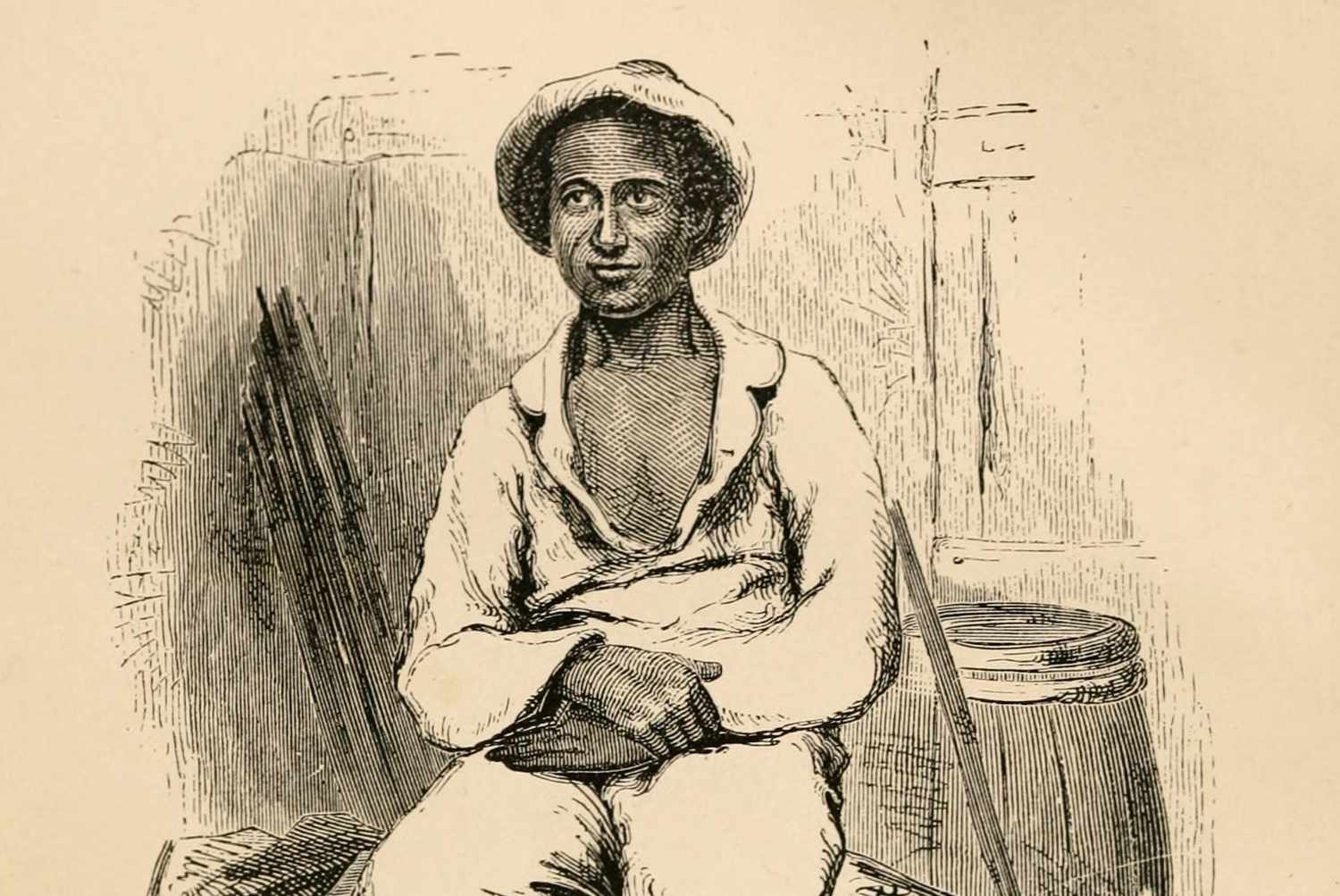
(on the Forced Labor Continuum)
In Virginia, today, three people who don’t know each other work along an invisible line, a continuum. Like the crew aboard the Providence, they’re living according to a mark next to their name.
At one end is Cyrus, in Richmond. He is enslaved, owns a few possessions and lives in a rough-cut log dwelling not far from his enslaver. Subject to sale at his enslaver’s desire, Cyrus has next to no liberty and freedom apart from that of staying alive.
Further along, slightly away from the near-zero freedom and liberty of Cyrus is Charles. He’s a bound servant, owned to a great extent as Cyrus is, but with a handful of restrictions and confinements on the behavior of his master. His term of servitude is several years long with extensive discretion of conduct allowed to the master. At an agreed-upon end date, he may leave servitude.
Of greater freedom and liberty than Charles but still not fully self-possessed in living his life is Nathan. He is an apprentice, seeker of a skill in exchange for providing labor. A formal contract describes the obligations and exchanges that comprise the relationship to his master, and his master to him. Like Charles, Nathan knows an end date exists but when he departs, he’ll take a skill with him.
Three points along the “forced-labor continuum”, with little or no freedom marking the vicinity of zero for Cyrus. Gradual shifts and changes show self-control expanding and moving further away from zero, somewhat so for Charles and noticeably so for Nathan. This invisible line exists throughout the Union. Much like the sun and stars the reign over the Providence, unimaginability hovers and floats along the FLC line.
War has already rattled and shaken the FLC line, bringing the unimaginable silently closer to view.
* * * * * * *
You never thought it, never bothered to think it. Yet here you are, in the middle of the unimaginable. Even in attaining a goal like, say, independence, you didn’t expect what’s happening today.
Also
(Jonathan Williams Jr)
In London, England, Jonathan Williams Jr winces at the answers he has to give to his great-uncle’s questions.
No, I’m still not married. The prospects for it seem bleak. Among the many obstacles is my inability to earn and keep enough money to support a wife and to convince a potential father-in-law to give permission for his daughter to marry me.
No, I can’t really tell my friends and family much about the status of my great-uncle, though everyone asks about him. I just have to shake my head and say, no, I don’t have any updates.
Worse of all—where the wince becomes a grimace—is that the great-uncle whom Jonathan reveres seems to think the great-nephew has changed his political beliefs, that he’s gone soft and squishy and slipped into “Toryism”, favoring British imperial power over the rights of the rebellious colonies in America. The suspicion hurts Jonathan, who wonders why his great-uncle must think so little of him.
Jonathan Williams Jr grabs a pen and today begins to write to his great-uncle to correct this mistaken view. He wants to get this important relationship back on firm ground. Jonathan will scribble “For Dr. Benjamin Franklin” on the front of the outside of the letter.
For You Now

I suppose in some leadership book or other, they’d call the topic of today’s Redux entry “unintended consequences”. That’s the standard term for my word “unimaginability”. Yeah, I guess that’s what they’d say.
But in the context of what we’re seeing in today’s Redux, unimaginability is more than unintended, unforeseen, or unexpected consequences.
For one thing, the scale feels much, much larger with the unimagined made real, and the real surrounding you on all sides. Abigail Adams and Jemima Boone point in that direction. So does George Washington. So does the man-with-new-names, John Paul Jones, who’s not only reinventing himself but immersing in a kind of drama he didn’t define.
Besides scale, the unimagined demands, first, a steadiness in the face of a hard jolt from the side and, second, a willingness to act quickly on a decision. That’s the feel coming from the strange and sudden appearance of John Sullivan in the Pennsylvania State House. The same is evident in the need to calculate gold and silver’s backing of new paper currency.
Finally, the unimagined may strongly press you to pivot from what you’re doing by choice to what you have to do by compulsion. Washington chooses to recommend a dreaded standing army while starting to see the value of that army fighting in ways he doesn’t like. Maryland’s Convention delegates want to design a state government but have to listen to the owner of a hundred acres.
There could well be a time when these 250 years vanish and, more than is true now, you find yourself as an American in the middle of the unimaginable.
Suggestion
Take a moment to consider—what about the unimaginable worries you the most?

(Your River)