Americanism Redux
September 24, your today, on the journey to the American Founding, 250 years ago, in 1776

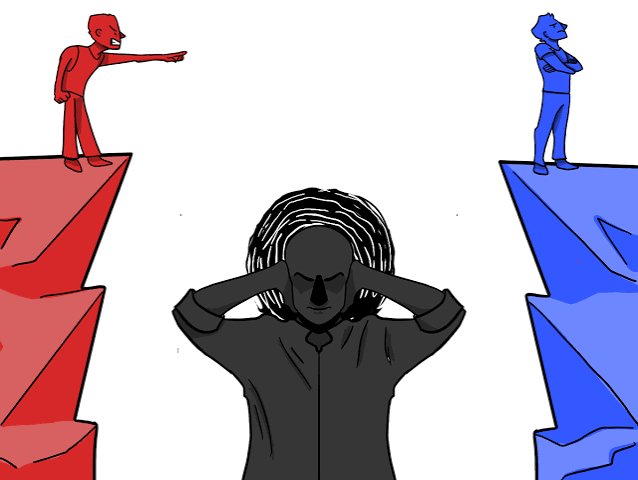
Opposites and extremes. From one end—zip—to the other.
We go from cold to hot, gentle rain to torrential downpour, drought to flood, all of this to none of that. This person is the tool of the devil, that person is the gift from God and, heaven help us, often it’s the same person being described.
It can be exhausting, disorienting, numbing.
And in the first week of fall, that’s exactly where we are.
Today, 250 years ago.
* * * * * * *
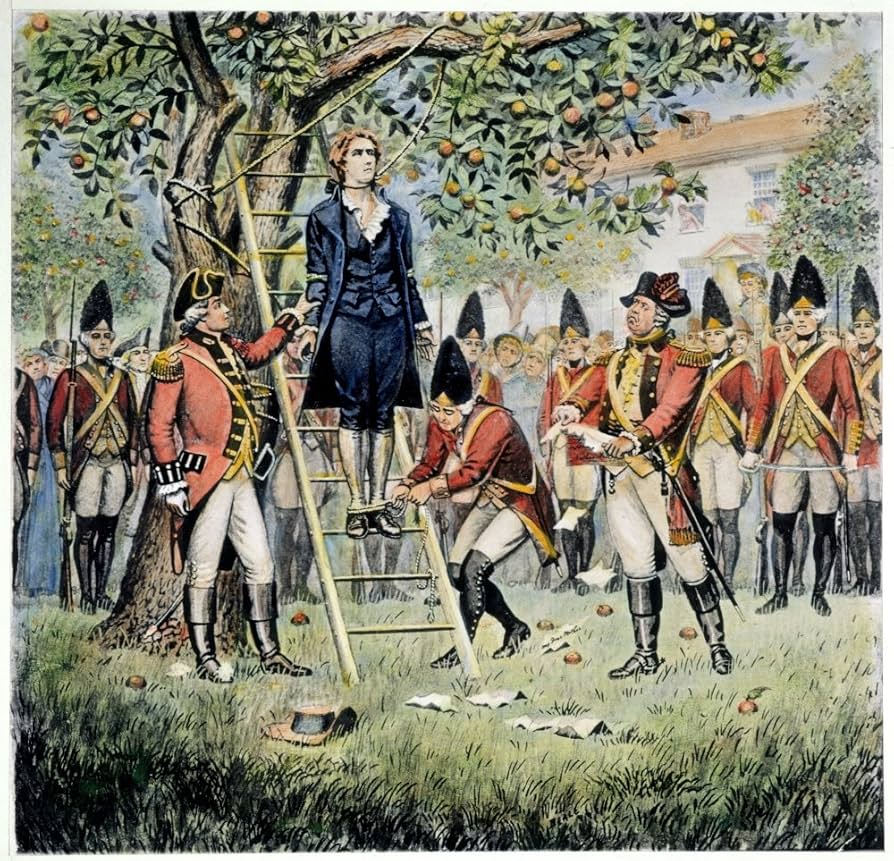
(Artillery Park, Long Island)
The place has a new name—Artillery Park, so called by British Redcoats who now control Long Island and Manhattan, where this place is located, as well as much of southern New York City. It is what it says it is: a place for the growing number of cannon and other artillery pieces being hauled ashore and arranged by the invading British Army led by General William Howe.
You’ll also note that trees dot the landscape of Artillery Park. Look more closely and you’ll see narrow, rectangular mounds of dirt about a foot high, a couple feet wide, and maybe six feet long.
Those are the common and unmarked burial sites of people killed who don’t matter to their killers dressed in red uniforms. No stone with etchings, no wooden slat with writings.
Check out that mound right over there. The dirt covers the body of strangled Nathan Hale. Reddened skin on his pale neck shows the rope burns of his hanging. That’s what killed him, the hanging, as ordered, the punishment for spying.
But that’s not what really cost him his life.
* * * * * * *

(no one at the scene wrote down his words)
Hale is two days dead after twenty-one years alive. A Yale graduate and an inexperienced school teacher, Hale had served with Connecticut militia back in April of ’75, became a Continental Army lieutenant in July of ’75, and at the start of this month in ’76 had decided to join an elite unit of irregular warfare specialists led by the rising-star Colonel Thomas Knowlton, a fellow Connecticuter. Hale kept wanting more.
He’d wanted more as a native of the place that had produced the celebrated irregular soldier of the French and Indian War, Israel Putnam. Hale wanted to live up to that. He’d wanted more in learning about Putnam’s protege, Knowlton, who’d provided morale-lifting raids and exploits beginning with the siege of Boston. Hale wanted to live up to that. He’d also wanted more when the Continental Army suffered defeat in the largest battle of the past 255 years, barely escaped total wreckage, and lately had done nothing but retreat, flee, or fall back. He wanted to reverse that. So he joined Knowlton’s unit and specializing in specialties, became a spy.
Hale didn’t know Knowlton was already dead after landing on Long Island and starting his first spy assignment a week ago. He was also unaware, ever since, he was under surveillance by someone he didn’t know or never met personally but totally knew by name.
A one-time irregular comrade of Israel Putnam’s from the French and Indian War, Robert Rogers had written a book about his military experiences. He’d further been entangled in some 1760s-corruption and shady dealmaking on the upper Great Lakes. Still more, he’d hinted about similar opportunities in seeking a meeting with George Washington last year. The world of Robert Rogers revolved around the interests of Robert Rogers as formed on paper money and hard currency.
Upon Hale’s landing, Rogers suspected him a spy. He tricked Hale into a first meeting by posing as an American spy himself. Hale and Rogers talked quietly and Hale, unaware of the web being woven around him, agreed to a second meeting. It happened again with more private talk about spying and enemy secrets and stolen documents. The difference was that Hale hadn’t seen the military witnesses and observers who sprang from the shadows as the web closed sticky and unbreakable. Hale was found with concealed papers and deemed guilty, spoke eloquently according to bystanders standing near him (but without direct quotation), and died by hanging in Artillery Park.
The end of Hale began with his mis-reading of Rogers. Jumping from hazy knowledge of old stories to a full trust in current impressions, the school teacher got stuck on past reputation, quick talks, and his own deep desire to want to do evermore in these troubled times. He was hanging in the web before he was hanging from a rope. The relationship killed him.
* * * * * * *

Just west of the nameless dirt mound is the smell of smoke. Still present. Strong smell, at that. Travel closer to New York City and the smell grows acrid, down inside your throat. Go onto lower Manhattan Island and you’ll be in the middle of it. Five hundred buildings went up in flames that became noticeable in the first post-midnight hour of September 21, supposedly starting near Fighting Cocks Tavern and spreading, dragon-like, between Broad Way and the Hudson (North) River. Roughly twenty-five percent of the city is burned and blackened.
The conspiracists are already out in force. Who started it? Is it mere coincidence that the Continental Congress and Continental Army were both discussing whether or not (deciding not, formally) to burn the city before the enemy arrived? Were secret and informal orders given? Did other people pick up the idea and do it on their own? Are we to believe it was chance that the fire exploded at this very time of war in the city?
British military officers are discussing the likelihood that fiercely anti-British Irish Presbyterians living in the Beekman Street neighborhood could be involved. Their hatred of British rule is well-known and makes them an instant focal point for investigation as British control of the city tightens.
This neighborhood is where General George Washington’s new household manager, Elizabeth Thompson, widowed, childless, and 72-years old, owns a house and other property. She supervises and organizes all internal operations of the General’s headquarters, from cooking to cleaning, clothing to furnishings, staff conduct to service excellence, everything domestic falls under Thompson’s watchful eye. She’s three months into the position and overall, Washington finds her work invaluable.
Thompson has lost her property to the fire. Just as importantly to her, the minister to her church congregation has also lost his home at 7 Nassau Street to the flames. Thompson is very close to the congregants of her church; they are surrogate family. Both she and they strongly support the American cause. Her new role as Washington’s household manager has stirred excitement among her church neighbors.
Her possessions are gone. Her home is gone. Her neighborhood with her closest and dearest friends is on the verge of enemy occupation. Her only surviving space is a shifting new home—wherever Washington locates his headquarters along with the people who live and work there. Elizabeth Thompson has a charred home in enemy territory and a temporary home in a standing army with no standing address.
Without immediate relatives, she finds family among the people who believe as she believes and live as she lives. Surrounded by opposites and pressed by extremes, Elizabeth Thompson starts the autumn, 250 years ago today.
* * * * * * *
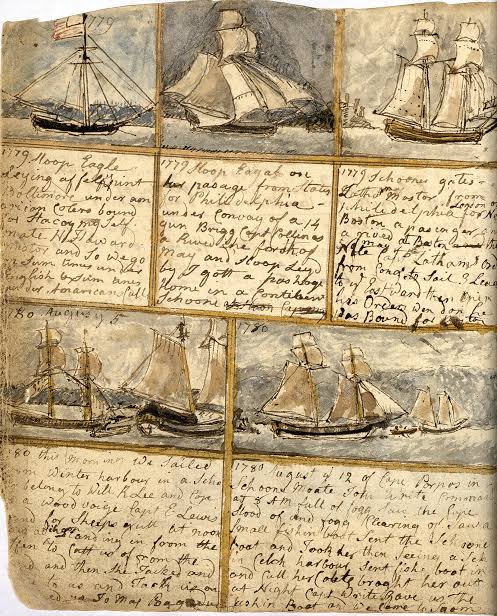
(the book Bowen wrote, with its nautical theme, the first of its kind in America)
The destruction of New York City sits west of the construction of Massachusetts.
As of now, it’s been a week since the Massachusetts General Assembly issued a question to all towns: should the Assembly produce a new Massachusetts constitution on its own authority, or should a new convention created for that purpose be empowered to do so? Towns are asked to have their eligible voters decide the matter as soon as possible.
At the same time, the General Assembly has issued a second announcement: militia are urgently and immediately called to turn out for no more than two months’ service.
These are two enormous public messages, one a question and one a call, one about a constitution and one about armed force. About as basic, and as sweeping, as it gets.
Three families.
The Warrens are James and Mercy O. James is Speaker of the House (Assembly) and he’s sympathetic toward having the existing legislature do the heavy lifting of constitution-writing. He’s holding off on saying much about it because at the moment the armed force/military side of the week has his full attention. He’s trying to boost the readiness of the state’s naval vessels. As for Mercy, James’s wife, she’s much more excited about the prospect and the necessity of having some new entity produce such a document and structure. She’s also terrified and burdened by the emotional strains of the combat and battle that seems critical to the actual outcome of independence. Count them as deeply interested in the political.
The Parkmans are Ebenezer and Hannah. A Protestant minister, Ebenezer senses bad tidings in his son’s and other men’s experiences on the front lines in New York City. Ebenezer realizes that people want the war to be short and quick. He’d preached lately to a new group of volunteer soldiers, urging them to remember that God “shalt deliver his (man’s) soul from hell.” Hannah exerts every ounce of effort to keep their sons well, be it in the army in New York or, in another’s case, as a college student at Harvard. Her driving concerns are their futures. She’s praying that a sovereign God protects them against a fallen world. Husband and wife stand atop the spiritual watchtowers.
The Bowens are Ashley and Mary. He’s a rigger and repairer of ship sails. He’s deeply suspicious of anything that’s decided or called for by the existing legislature. In fact, he’d been fine if the prior system returned—with the pre-1774 imperial government back in place with active docks and shipyards. Coming from a longtime fishing family before marrying Ashley, Mary agrees with her husband, though up to a point. She’s deeply connected to her extended family; some are Union supporters. To Mary, the Union is worthy of greater attention than her husband is willing to give it. To them together, however, the sea and the saltwater sustain life.
To build up you first have to dig down. With these views and others like them, the shovels are out and the work has commenced in Massachusetts. There’s a lot of unearthing to do before it can join New Hampshire, South Carolina, Virginia, New Jersey, and Delaware with operational constitutions. The question will be if Massachusetts falls in line with Connecticut and Rhode Island in rebranding colonial charters as state constitutions.
* * * * * * *

(Casdrop’s view)
Early fall has a certain feel on southern Lake Champlain. A chill air and sharp breeze can come at any second, while the water and sky take on a bluer tone. Thomas Casdrop, in his fifth decade, has seen plenty of autumns but none here. A warm coat is a welcome friend when so many around you are struggling with illness.
A highly successful shipbuilder from Philadelphia, Casdrop is deep into a naval arms race on this brisk fall day on Lake Champlain. General Benedict Arnold has approximately 400 men—many skilled and some enslaved—working like mad to build a naval fleet capable of defeating a British force at the north end of Lake Champlain immersed in this freshwater competition for naval supremacy.
Casdrop is driving his workers hard to complete the vessel of keenest interest to him—named “Congress”, over seventy feet long and marked to be Arnold’s command ship upon completion. Everything’s a problem—rain and mud slow the work; shingle nails in short supply; green wood is the devil to use; sickness among the laborers; tie-ups in the supply chain of sawyers, blacksmiths, and riggers; and the overall gripes that come with men in barracks away from home who smell defeat. Casdrop and Arnold care only about results: these vessels have to be finished and shoved into the water as fast as possible. Every falling leaf marks another disappearing minute.
If the British seize effective naval control of Lake Champlain, a long stride has been taken to sealing off New England from the rest of the Union. Should that happen, the constitutions of these states won’t matter much.
* * * * * * *

(the first line of clouds is the Appalachian Mountains)
The Carolina upcountry sees fire, smoke, and dirt-mound graves today 250 years ago.
Cherokee villages in both western regions along the Appalachian Mountains lay smoldering, the targets of attacks by Union military officers Andrew Williamson of South Carolina and Griffith Rutherford of North Carolina. It’s not sections burned—everything’s gone. It’s not arms races—every weapon imaginable has been wielded in the violence. It’s not units moving in cadenced motions—it’s the all-out crashing, smashing, and bashing of irregular warfare, with the greater speed, surprise, and sometimes, brutality the better from the attacker’s perspective. And it’s not always connected to political ideas and public grievances—it’s the latest of a long line of hostilities and resentments.
Of extremes and opposites, it’s not war is hell—it’s hell as war.
* * * * * * *
Every circle is a bent line, and opposites and extremes can sometimes touch together.
Also
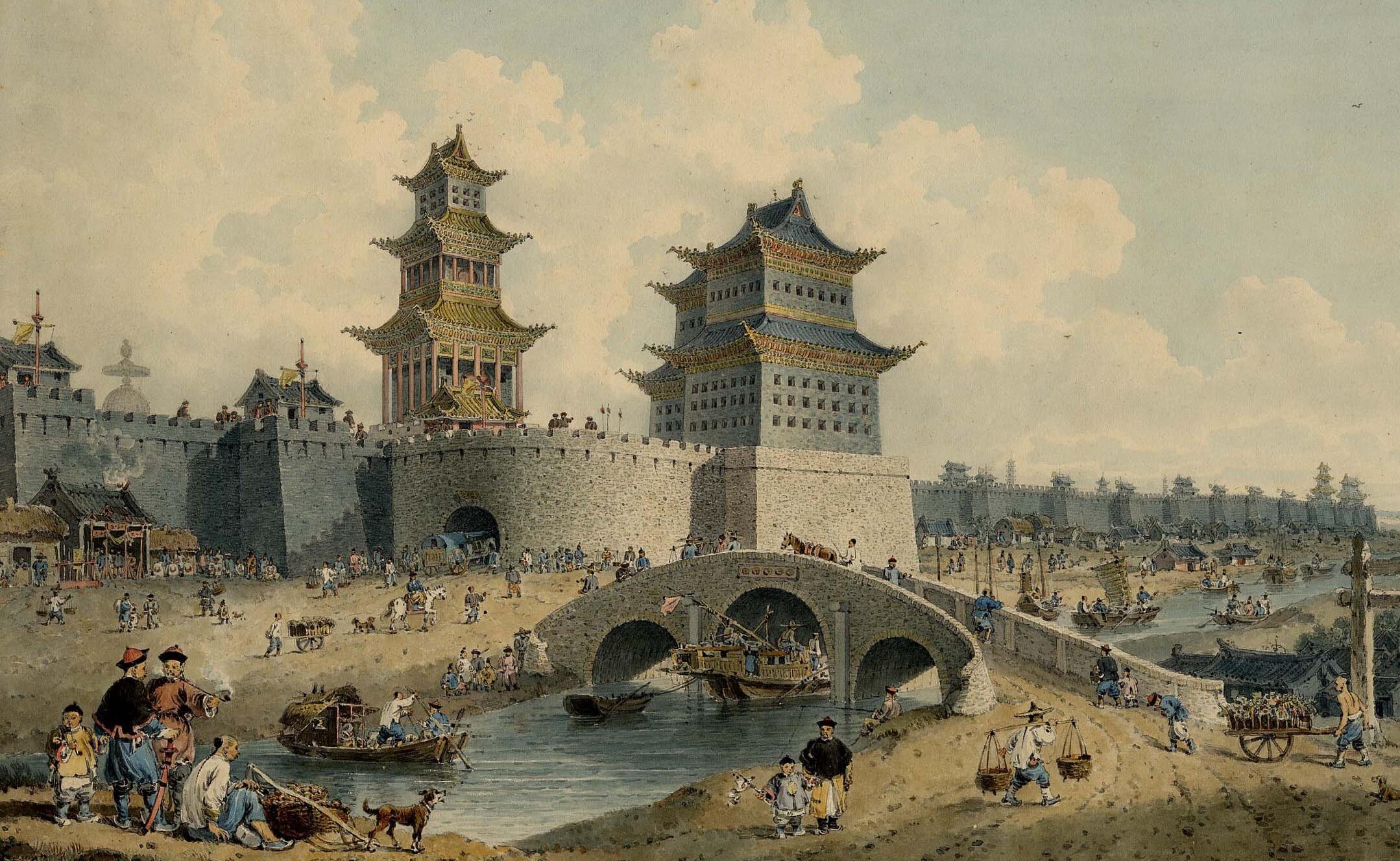
(Party City)
One helluva party and reception is planned for tomorrow in Beijing, China. The 65th birthday celebration of the Qianlong Emperor, the 41st year of his reign, is twenty-four hours from now. The blowout will be mind-blowing.
Go wherever you want in the Imperial City and you’ll see last-minute birthday preparations. Lanterns and silk streamers are hanging from anything that can support them. Stages have been built for use by operatic performers; they’re resting up now because they’ll go just about nonstop throughout the next day’s celebration. Officials, courtiers, and hangers-on have been assigned gestures, postures, and bodily movements to display in front of the Emperor, along with specific sets of tribute gift items, including jade. Older people have been given exact directions on performing charity in the Emperor’s honor. Foreign representatives have been encouraged to attend with the goal of impressing them with Chinese superiority and achievement. You’ll likely lose sense of yourself in the enveloping atmosphere of praise, ceremony, and glorification.
If you think of it, look for people other than the Emperor. Heshen will be there, a 25-year old status-climber who’s mastered the various strains of the Emperor’s wealth and household budget. Ji Xiaolan will be in attendance; he’s managed the scholars who’ve been compiling the latest additions to the “Complete Library of the Four Treasuries”, promoted as the sum of all knowledge. And General Agui may be the most visible of all after the Emperor. He’s a “special guest” for having commanded successful imperial forces in the Jinchuan War.
* * * * * * *
An extreme event can produce an opposite effect.
For You Now

I like where we started, with an open admission of how extremes and opposites, over and over again, can drain your energy, focus, and vision.
You’ll have to provide the center, the midpoint or anchor place, to which the extreme and opposite are tethered. If that’s true, and I think it is, the question is where your strength comes from for dealing with opposites and extremes that turn into onslaughts. The weaker the source of strength the greater the chance that you get pulled into extremes and opposites. They’ll drag you off center and keep you at the edge and, perhaps, the breaking point.
One thing further. Between the extremes and the opposites is space. That’s not only the location of the center but also the spots of gradation, of varying points between extremes and opposites. They exist, regardless of what edge-based outliers shout and yell at you. You’ll have to know how to listen, hear, judge, and discern.
Our Redux today gives you some startling scenes of extreme and opposite. Hale and Rogers (oh, and no witness recorded what Hale said). New York City and Massachusetts. The homes of Elizabeth Thompson. The Carolina mountains and the Champlain waters. Beijing and everywhere else. And those points in the space between? That’s where relationships exist that you’ll have to decide on—between people, between places, between events. You decide and in your deciding, a potential exists.
Your decisions on how they do or don’t relate will populate that space between extremes and opposites.
Suggestion
Take a moment to consider—have you been Hale-like, mis-reading a relationship of person, place, thing, or event that ended up going in a bad direction?

(and around the bend…what exactly?)