Americanism Redux
September 10, your today, on the journey to the American Founding, 250 years ago, in 1776

See that over there? It’s a problem.
That one, too? Another problem.
And that. And that. And that. Problem, problem, problem. Major problems at that.
All on top of each other, their weight crushing and pressing and flattening whatever or whomever is beneath them, in their today before 9/11.
But maybe now, 250 years later, you know just a little something that can lighten the load.
Welcome to Americanism Redux.

* * * * * * *
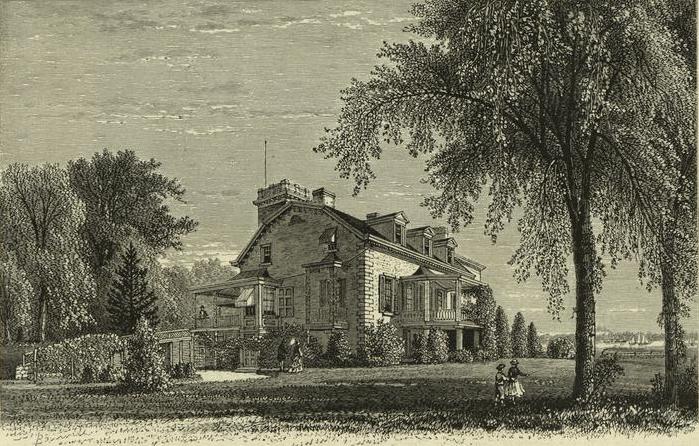
(her mansion)
Sarah Morris looks out a second-story window of her family’s mansion at Morrisania, along the East River and saltwater wetlands of Long Island Sound. Problems upon problems, they number like the reeds waving in the September tide. For the Americans, that is.
Sarah Morris loves England and all things British, hates the Union and all things by now counted as American. Sarah knows that the British trounced the Americans in last month’s battle and that the American army under Washington skulked away under cover of fog. Typical. She can tell further by the nervous comings-and-goings of Continental Army units—most men marching with a few riding horses—on her 1,000-acre estate that they expect another clash with her beloved Redcoats. Oh how she relishes the hope of another imperial victory, perhaps the culmination of British re-domination and the devastation of those soldiers called Continental.
The only darkness in her mind is that two of her sons are staunch rebels (one, the future will show, signed the Declaration while the other signs, after helping to write, the Constitution).
But today on September 10 she blinks the thought away and gazes out her New York window. Tomorrow’s sky, she breathes, will be brighter, one closer to that ultimate British victory.
* * * * * * *
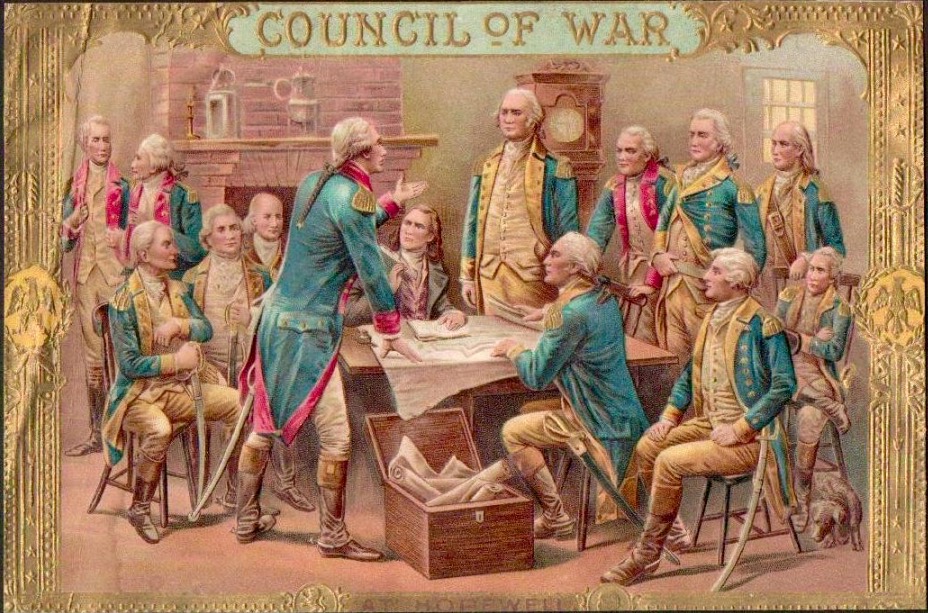
The men Sarah Morris sees outside in varying degrees of unease, self-doubt, and visible skittishness are moving according to orders given by General George Washington. Those orders belong to the aftermath of a quasi-Continental Congress held at Washington’s tent two days ago. Weirdly, it was almost a year earlier to the day that something similar to it had occurred outside Boston. On the table was the question of attack. At stake was the potentially new relationship of the Army to the rest of the Union.
Inside the tent, you didn’t see delegates or representatives or committee members in session. Instead, you witnessed a dozen high-ranking officers of the Continental Army, with George Washington in a genuinely preside/nt role, in a “Council of War”.
They had enough problems to carpet the floor. Defend the city or leave. Stay in one location or spread out, and if so, how many and where. Build up more barricades and wait to respond or get out and keep on the move. Move the sick or protect the sick. Expect more reinforcements or brace for reduced ranks. Follow the wishes of Congress or break off in the army’s own direction. Anticipate a fast-moving enemy or plan for its slow-footedness. Act now in the face of coming seasonal changes or delay until the seasons change.
Every single answer carried gigantic implications. Every combination of single answers multiplied the implications.
Washington himself had wanted each of the dozen partipants to explore their thoughts on each individual question. But math and time harmonize at their pace; Washington abandoned his notion about fifteen minutes in as commentary bounced back and forth off the canvas walls. The best he got was to “collect their sense more generally than I could have wished.”
With the tent flaps moving in the breeze of dusk and the latest round of candles burning low, the session ended with half-measures. The army was to be split into three parts across vicinities of the city, knowing the enemy navy could move around them, and perceiving a not-distant future of engaging in a “war of posts”, or a vague blend of mobility and aggressiveness that kept a core of the force alive. The key was that the army—///note, the army/// and not the Continental Congress, not whole states, not territories, not regions or communities, not a defined set of functions across a large area, not an assumed group called the “people” and a principle-practice called their “idea”—but simply the “army” would have to avoid defeat and fight on if the Union cause was to be won. Everything bent toward The Army, the one to win.
* * * * * * *
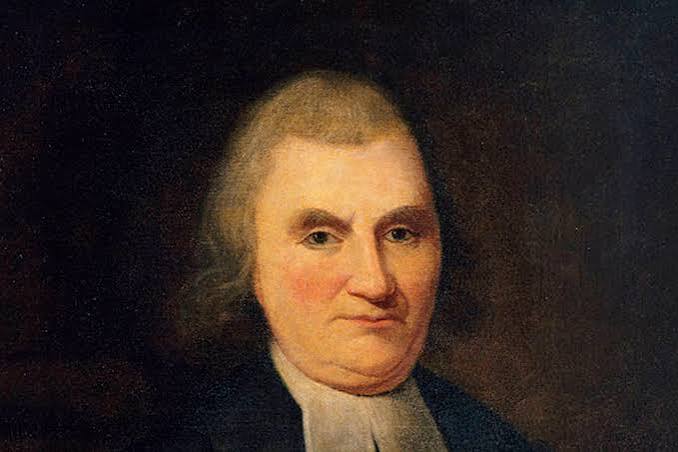
(Witherspoon, one of the speechmakers)
In the Continental Congress sitting in Philadelphia there haven’t been so many letters, speeches, writings, and talks about a topic since independence back in the early summer. Until now, with the two-fold event [of 1) British General William Howe expressing his sorrow over the current war through the use of 2) captured Continental General John Sullivan’s appearance to orally repeat Howe’s expression to the Continental Congress last week] that has opened torrents of outrage and confusion among the forty-plus delegates at Pennsylvania State House. New Jersey delegate Reverend John Witherspoon typifies the anger in a long speech to his fellow members of the Continental Congress. He declares the “justice of the cause”, not the circumstances of war, makes the American movement unassailable. Regarding the army, he predicts the biggest danger is that Congress’s moderate interaction with Howe will rob the soldiers of their spirit.
As a group, the delegates have collected debris from their internal storm to piece together a collective response. It somewhat sidesteps Witherspoon’s speech: a committee will visit Howe’s headquarters and hear him out. But so great is the Congress’s rage that many members refuse to serve in the trio. Finally, three delegates are persuaded to take on the task. They are John Adams, Benjamin Franklin, and Edward Rutledge. Of much greater importance than their names are the places they’re from. Each lives out a different region of the Union—north, middle, and south—and together they are human symbols of the Union’s continental standing. The delegates believe these bodies make a point.
It is a claim they can make all the more dramatically after another decision reached quickly this week by the delegates. With the four proposed seals by the Seal Committee still stuck without any major support inside the Continental Congress, the delegates vote to name the Union the “united States of America.” Names, it seems, attract votes better than images.
Newly named and newly committeed, the Union’s trio await the fateful meeting in New York during those twenty-four hours after September 10. The encounter there could change the world.
* * * * * * *
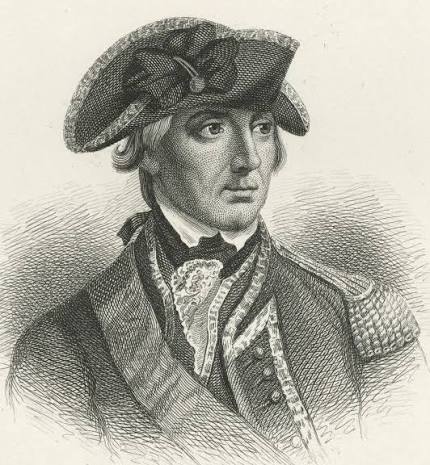
(William Howe)
The upcoming meeting with William Howe is one of several he’s either conducted or convened in the last several days for a specific purpose. Part of his work, in addition to moving his British forces to entrap Washington’s Continental Army, pertains to taking first steps in returning Long Island to British imperial order—the first such first-step yet in the war for the British. He’s issued a rather bland, cold statement announcing that oaths of allegiance are expected; no other remarks or commentary appeared. Next, he’s deputized a Long Island Loyalist to act on his behalf in raising local military units to supplement Redcoats fighting the rebels.
The recruiter’s arguments display British visions for re-establishing imperial order. The enemy is “Republican despotism”. Under power seized by “self-created bodies”, free speech and personal freedom have been seized from residents supportive of England. Poverty and economic despair are also the enemy’s results. The British goal, and reward, is “a return to America of those happier days we have all seen” before crisis arrived.
The birth of the crisis, the extent of the crisis, and the course of the crisis are all assumed to not exist other than as examples of or opportunities for rebel exploitation. The new goal is an absent time that will, through arms and armed power, return. The multiple problems that produced the crisis vanish into a deep void.
* * * * * * *

(Cannon’s trajectory)
That Loyalist recruiting officer and British General William Howe wouldn’t know what to make of 36-year old James Cannon. Then again, maybe they would.
Five months ago, Cannon, a Scottish immigrant, was using his skill in mathematics to teach college students in a Philadelphia classroom. Then, a few weeks ago, he used his skill in political thought and classical learning to become one of the town’s leading delegates in the Pennsylvania Convention to design a new government for Pennsylvanians. Now, a few hours ago, he’s been named as a justice of the peace, with his authority rooted in “the people”, according to Convention-goers. College professor to revolutionary delegate to justice of the peace, it’s a stunning journey at breath-taking speed.
His new days are talk, debate, meet, listen, read, think, plan, propose, trade, compromise, and decide.
The talent and energies of Cannon and the rest of the Convention delegates go toward a weeks’ long effort to draft a state constitution to be put before Pennsylvania’s eligible voters. Within that time, they’ve also created a state treason law, defining terms and laying out conditions for enforcement. An additional priority, done and announced today, is a new proposal to ensure equitable funding of wages and bonuses given to the “Associators”, a voluntary group of soldiers. He’s answering how governing will occur, what active denial of that governing will mean, and which duties demand fair obligations.
Cannon is the embodiment of collective self-government, birthed in the act of separation from a distant empire.
* * * * * * *

(Thomas Johnson Jr)
They share a line that divides them.
About a decade ago Charles Mason and Jeremiah Dixon laid out the border that seemed acceptable to Pennsylvania on the north side and Maryland on the other.
Today, the people of Maryland are joined with their northern neighbors by more than a shared line. Thomas Johnson Jr and other delegates in Annapolis, Maryland are also drawing up a state constitution, outfitting the mechanics of self-government. He’s a long-time lawyer, politician, and since early this year, militia officer. He’s also author of a declaration of rights that’s assumed will be part of the constitution created in Annapolis. Like Cannon and the Pennsylvanians on the other side of the line, Johnson and fellow Marylander delegates deal with other issues simultaneously—they approve a call for nine counties to furnish militia to serve until December 1, announce the need for 1,000 pikes to be collected, and decide to create two new counties named, appropriately, in honor of the living General George Washington and the deceased General Richard Montgomery. The war etches its lines in the soft skin of a new State in the young Union.
Marylanders are also trying to keep living life. Alexander McFaddon of Frederick County hopes to launch a textile business, located in a house where he’s moved sixteen looms and no workers. George Dashiell extends by two months his duties as tobacco inspector in Somerset County, complying with an order issued by the state’s Council of Safety in charge of day-to-day war problems. And dozens of families—the Allens, Dwigens, and Lynns among them—grow increasingly worried as news crawls south of Mason and Dixon’s border line about high casualty rates, awful camp conditions, and sick and beleaguered Maryland men in Washington’s Continental Army at Harlem, New York. Surely these Marylanders will fare better with the new government of Maryland.
With combat destruction, economic displacement, and social disruption, war piles up the problems with no regard for the work of Annapolis.
* * * * * * *

Two men dig at the piles in front of them.
Joshua Davis is aboard his vessel in the water off southern Cape Cod. He has two mortar cannon aboard for delivery to the town of Sandwich on the Cape’s north shore. He realizes the ocean route round the land formation from the south is more treacherous than he assumed. Moreover, he learns enemy British ships are on the prowl. The answer to problem one is to hire a skilled pilot, while the answer to problem two is to increase the number of his own men. Problem three—he doesn’t have enough money for either problem one or two. Having decided on his own to make the necessary adjustments, Davis writes a letter to Washington asking for funds to pay for the changes. For the moment, the pile diminishes in the damp salt air, at least until whatever waits round the bend on the day after September 10.
John Hardcastle is in the Potomac River region of Virginia. A year ago he’d chosen the British way, that George III and the imperial monarchy made sense in his view of the world. He wasn’t bashful about saying so and that’s what got him into trouble. Supporters of the Union demanded, coerced, and intimidated him into giving a mumbled apology with a clear declaration that “I intend to leave the colony soon”. But it’s a year later and he’s done neither—not left the “colony” newly called a state, not abided by his definition of future as “soon”. Hardcastle realizes his pile problem is tri-leveled, the terms of place are changing, someone else’s sense of future is being forced on him, and both time and space are taking on these new forms across the north, middle, and southern Atlantic coast. Yet he’s still here, still rooted and rocked in the soil, still in Virginia, still Virginian.
* * * * * * *
Problem on top of problem on top of problem.
Also

(not quite 50-50)
Ganga Govind Singh is well-versed in the ways of British General Warren Hastings.
The two men have worked together for the past few years in Bengal, the western region of the British imperial holding known as India. Singh recognizes that Hastings has more than passing appreciation for local ways and customs. Though he can’t measure the man’s heart, Singh is confident that Hastings views his self-interest clearly enough to want to know how to blend British power and Native heritage, influences, and habits. It makes for less mess, a reality both men can acknowledge.
Singh has extensive experience in land deals, land arrangements, and land acquisitions in Bengal. He has a brilliant understanding of how revenue flows from land ownership, possession, and usage. He’s a source like no other in Hastings’s effort to make the best outlines of new or altered policies to generate imperial wealth and maintain imperial control. For King, for Country, and for East India Company.
Singh can adapt to that outlook while retaining his own identity of Bengali Hinduism, Mughal politics, and Persianate ties. It’s a balance to be sure, but not every balance is 50-50…just so long as it adds up to 100.
And beyond the vision of Hastings, Singh can count it all out his way.
For You Now

No doubt, you’ll take note of the September 10th dating. Not forced by me, it just works out that way, a day ahead of our 9/11, which resonates louder for us this year because of the number 25, or 25th. Some anniversaries, like some numbers, mean more than others.
250 years ago, groups of people in different places attached major importance to the day after September 10th. Delegates of the Continental Congress dread the outcome of the three-person committee’s journey to enemy headquarters and the meeting set for the day after September 10th. Washington has already had his version of 9/11 with the historic battle debacle on Long Island August 26-29. Washington awakens day after day thinking that it might be the moment when the next 9/11 alarm sounds and the enemy swarms over his army. His nerves are triply heightened by the Council of War and its ominous discussions and half-decisions.
Conversely, in the real time of September 10, 2001, we attached zero importance to tomorrow.
Their 9/11, as we will see, came and went. Our 9/11, as we now know, came and instead of went, it wended, never fully leaving but zigging and zagging and rollercoastering, in the roar on to next destinations. Remember the River—change and continuity flow in eternal interplay.
It’s right to believe that a type of 9/11 by definition is change. Absolutely. Further than that, however, in the immediacy of jolting change, you’ll instantly learn how strong your grip is on continuity. As the hours and days move onward, you’ll begin making more decisions about the exact value and worth of what you hold in continuity.
A thought on the problems grown to piles.
I’ll have you do what I always ask you not to do—which is, to bring to the forefront your knowledge of how things turned out. We know the American Revolution continued, was won, succeeded, or whatever term you prefer. We know how it went. That should tell you something very important for today’s Redux: the presence of problems all around you IS NO GUARANTEE OF TOTAL FAILURE OR ULTIMATE DEFEAT. You can hack at a problem here, or there, or even further over there and maybe make some progress, see some improvement. Do it enough and they’ll add up, things can turn around, and before you know it, a chance at success rises up. That’s great news and we know it’s true from the way the Union’s Nation survived the Revolution.
Don’t worry about the hackaways being perfect or complete. Don’t worry about them being finely coordinated—though do give some thought when you can to potential tensions, contradictions, or undermining from them—you don’t want a solved problem creating three more.
My advice for piles of problems is to just hack-away at them. It might take a while but chances are good that positive results will appear one way or another.
Hack away while you ride Down River on the current of change and continuity.
Suggestion
Take a moment to consider—what’s been lost and what’s been gained by the 25th year after 9/11?

(Your River in front)