Americanism Redux
October 22, Your Today, on the journey to the American Founding, 250 years ago, in 1776
A big difference separates center from central.
Center is a place, a position. Central is place plus—plus pre-eminence, prominence, and often, dominance.
Sometimes we make the mistake of thinking the center produces the central, or the central must be the center. Such a mistake can push us off track.
Take care with that.
Welcome to today, 250 years ago, and to Americanism Redux.
* * * * * * *
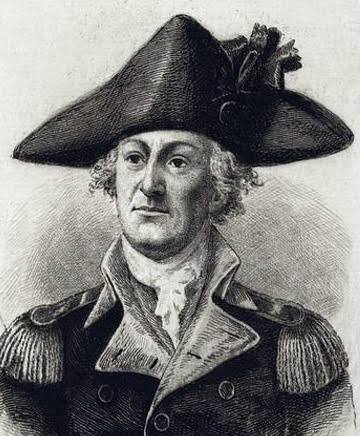
(Robert Hanson Harrison)
Wow, what he’s lived, learned, and experienced in a year.
Robert Hanson Harrison has been on Continental General George Washington’s staff for almost twelve months. A friend of Washington’s prior to this position, Harrison has been entrusted with all the duties of a military secretary. He writes orders and correspondence dictated by Washington, helps shape the transition between Washington’s ideas and the written page, protects military records, and is often his representative in face-to-face meetings, encounters, and outreach. From the standpoint of being in the midst of important events, it’s a dream job.
Harrison also has gained knowledge and insights he never had before. The 31-year-old lawyer learned from Washington that the enemy has revealed a basic strategy in this gorgeous autumn on the southern Hudson River: to use the navy to land and invade from a place north or “behind” Washington’s position, the main force of the Continental Army. Yes, the enemy wants to control and occupy New York City, a feat already hardening into reality. But now they want that northern position “above” the Continental units led by Washington. Harrison’s boss estimates that Kingsbridge and Fort Washington—the general blushes a bit at the post named after him—are vital lines that now define the fighting space.
As honking geese fly south overhead, unmistakable to Harrison as a sound of the season, the center of the war appears to have changed. No one declared it, no one announced it, yet the clear truth is that the British Army and its commander William Howe believe their key target is Washington’s force. The center is less about a fixed place and much, much more about shifting space that holds a particular group of people wearing uniforms, bearing arms, and carrying flags.
* * * * * * *
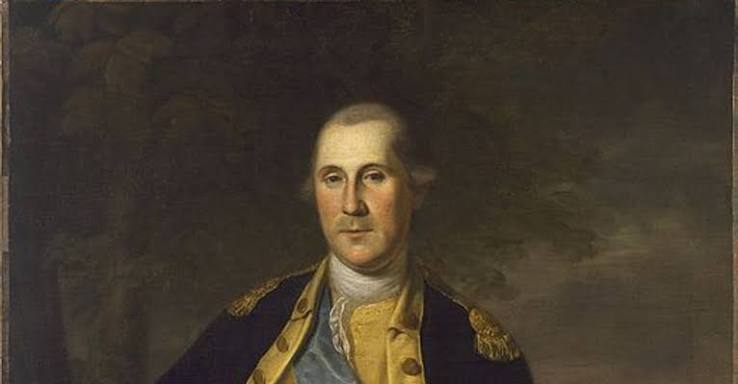
(Washington)
The dynamic has earned a new phrase that George Washington coined this week: the “moving state of the Army”. A term of full dimensions, he’s weaving an entity’s (his army’s) collective outlook, organizational capacity, and geographic standing into a single presence. The presence has become a center, which to Washington requires the enemy “must never be allowed to get above us & possess themselves of the upper Country.” Mark that word—us.
To a younger brother, Washington writes, “We are, I expect, upon the Eve of something very important; what may be the Issue; Heaven alone can tell, I will do the best I can, and leave the rest to the supreme direction of Events”.
When you realize you’re at the center, you start seeing the future differently.
* * * * * * *
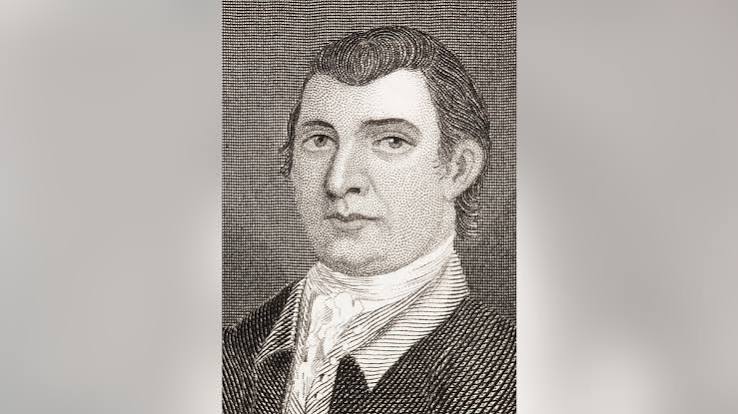
(John Glover)
John Glover knows what that means. In this center a few days ago, John Glover saw the future at the edge of the universe and the edge of his nose at the same time.
He and 750 men saw more than 4,000 of the enemy headed their way at a place called Pell’s Point on Long Island Sound. With no command, no direction, and no reinforcements closer than three miles away, Glover faced a decision: what do we do, which also meant—what do I do?
Glover stacked his truth in layers. “…The lives of seven hundred and fifty men immediately at hazard and under God their preservation entirely depended their being well-disposed of; besides this, my country, my honor, my own life, and everything that was dear, appeared at that critical moment to be at stake. I would have given a thousand worlds to have had General Lee, or some other experienced officer to direct, or at least to have approved of what I had done….”
They and he fought from behind walls, behind trees, behind the ups and downs of rolling land. They deflected the British landing, as had happened at Throg’s Point last week, and pushed them further north to search for the ground of an invasionary thrust. Fresh from these hours ago, with Glover and his solitary, gutsy decision followed by the blood and sweat, the fearful shouts and joyful yells, of his Continental Massachusetts men, the form of a “moving state of the Army” takes shape as a center.
* * * * * * *
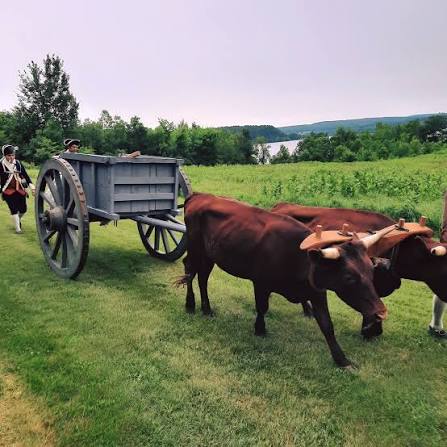
(neither is available)
The reality of this center casts new light across the red, gold, and brown leaves of the autumn trees.
If you live near Kingsbridge, Fort Washington, or a dozen other places in this center, life has changed. Do you need an extra cart to haul crops harvested on your farm? Forget it—no carts can be found, the armies are using them all. Do you need extra teams of oxen or horses or mules to pull your own wagons or carts? Forget it—they’re nowhere in sight with all of the military demand. Are you a governor of Connecticut or Rhode Island, like Jonathan Trumbull Sr or Nicholas Cooke, and you want men to reinforce your local units and situation? Forget it—Washington needs every man and will just as likely urge all available troops sent to him “on the eve of something very important…” And if you’re Generals Benedict Arnold or Philip Schuyler and need reinforcements in your face-off against Redcoats, Natives, and Loyalists on southern Lake Champlain? Forget it—you’re on your own. As it sucks in resources, energy, and focus, the center becomes central, or centralizing. Priority makes for power.
Oh, and a further point on Schuyler and the center. Washington can give him one thing: advice. In a letter this week he admits having never seen Ticonderoga, Schuyler’s current spot awaiting an expected British/Native/Loyalist assault. But then, after a brief pause to criticize militia and non-professional soldiers, he goes on to detail what Schuyler might (or ought, or should) think about doing at Ticonderoga, which he’s been told is “almost impregnable” if properly manned. He concludes the letter to Schuyler with an assertion that if local volunteers around Ticonderoga prove effective—of whom Schuyler has called for 9,000—they will “differ in Character from those who have reinforced the Army under my Command.” Ouch.
In other words, Schuyler’s center seems to directly contradict Washington’s center and its “moving state of the Army”.
* * * * * * *
(modern auctioneer)
For the past two days, the smell of salt mixing with the aroma of dead leaves, Sheriff Henry Rice has been working nonstop to conduct the sale of one seized ship’s cargo of sugar, copper, rum, wine, and pimento at Providence, Rhode Island. Rice hears echoes of shouted prices, rhythms of “whadoihear, whatdoihear”, barkings of “over here!”, hands stabbing up to signal “yay!”, and blasts of “sold!”.
It’s part of the prize court. Every state with significant coastlines and seafaring communities had sites where people adjudicated and processed any enemy vessel—military or commercial—captured at sea with goods aboard. Multiple sites existed in Massachusetts, Rhode Island, New Hampshire, Connecticut, and Pennsylvania. Like sea life around coral, each site had clusters and networks of judges, insurers, auctioneers, appraisers, investors, sea captains, lawyers, and law enforcement. Their interests ran to money, speed of deliberations, sources of decision-making and rule implementation, and market values, to name a few.
Every item in Rice’s auction is fuel for potential disputes, counterclaims, and fraud accusations. Or nothing at all will happen next and everyone goes home quietly until the next vessel is brought in. With prize courts, you can never tell.
The identification of one center does not preclude the rise of other centers along with it. As of now 250 years ago, an effect of war has created unusual centers of work and attention. While big fish cruise the open water, the coral has its schools and the prize courts have their procedures.
* * * * * * *
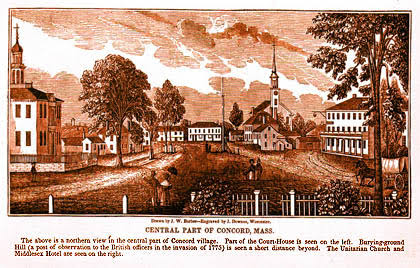
(Concord)
Massachusetts is home to the largest number of the prize courts and, coincidentally, to discussions of the broader government around them. Concord is among the first towns in the state to hold a formal meeting to examine the issue of who should write a new constitution, the legislature or a special constitutional convention.
One of Concord’s families deeply involved in the meeting held the past two days is the Woods, Mary and Ephraim Jr. 39-year-old Mary is only days away from giving birth to their ninth child. In addition to struggling to stay comfortable, Mary has kept active in the processing of her father’s will; he died last year. Among other things, the design of a new government in Massachusetts could affect the distribution of the estate and whatever voting qualifications are established. The eldest Wood son will be sixteen tomorrow.
Mary’s husband Ephraim has been a local leader of colonial-turned-Union rights for the past five years. He’s the 43-year-old town clerk who only this month officially recorded the Declaration of Independence in Concord. Over yesterday and today, Ephraim presides over and moderates the local town meeting that tackles the constitutional question. A day ago, Ephraim certified the town’s formal “yes” vote on a special constitutional convention; today, he’s part of the team drafting resolutions to amplify on the affirmative vote. For all he knows, when he returns home tonight, Mary will be cradling the ninth Wood in her arms.
Wood and his fellow pro-convention voters believe that leaving constitution-making to the current legislature—at the center of the state’s existing government—will bias the design of the state’s new constitution. In their view, that’s an unfair advantage, building the center position into a central power.
* * * * * * *
(John Bubenheim Bayard)
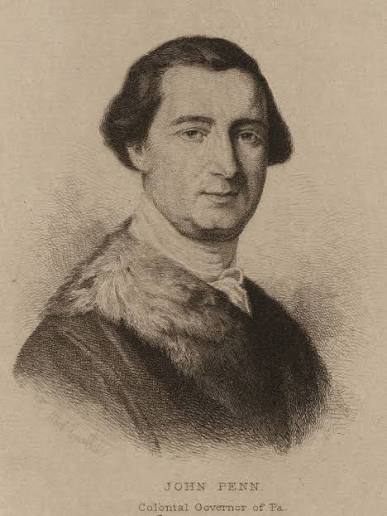
It’s been a wild series of rowdy meetings in Philadelphia. They’re further down the road than Concord and other Massachusetts towns. The people of Philadelphia have a finished draft of a state constitution in their hands—in their newspapers, too—and in three meetings over five days, it’s clear that an anti-constitution group has formed and is attempting to derail the draft constitution. The work they want revised is the product of a special convention.
They met first at the school associated with Christ Church and as the crowds grew to nearly 2,000 people, they shifted to the yard of Pennsylvania State House for the second and third meetings. Pro-Constitution speakers were included in the events, though the overall tone of discussion was undeniably negative toward the proposed constitution. The document emphasized radical self-government, public control, and grassroots organization.
As Ephraim Wood Jr is doing in Concord, Massachusetts, John Bubenheim Bayard presides this week over town gatherings in Philadelphia devoted to state constitutionalism. Five years younger but longer-serving in the colonial/Union cause than Wood, Bayard is a merchant, a militia officer, and a recognized voice in local civic and political affairs. He distrusts the draft constitution, especially the open tilt toward popular power. Bayard wants every door closed that might usher in chaos and disorder.
Among the pro-opposition crowd in the yard of Pennsylvania State House, Bayard stands in October’s long shadows of the facility that, for twenty-five months, has been the center of the Union’s formation, the spot of conception. He’s wary of a design that puts central power in the wrong place.
* * * * * * *

(Little Tennessee River)
The battle hasn’t occurred. Colonel William Christian and his 1,800 men expected a major clash with Native Cherokee warriors. It’s not happened as they encamp along the Little Tennessee River, not far from Big Island Town (Mialoquo) in the Cherokees’ Overhill region.
Two things occur with every hour that passes without the predicted combat. One is Christian’s steadily growing belief that negotiations will be the result of this part of the combined Virginia-North Carolina-South Carolina war against Cherokee Natives and other tribes encouraged by the British to fight the Union states. The other is an equally expanding probability that other tensions begin to foment between officers in Christian’s force. For a considerable time, the prospect of violence had taken center stage in the minds of the men. The prospect of no violence empties the stage and opens auditions for new thoughts, new feelings, new gripes.
* * * * * * *
The center is “of” something. The central is “to” something. 250 years ago, these tiny words of space and function say much about the changes of October.
Also
(Cook’s ship arriving at Cape Town)
Twenty-one guns just finished up their blasting of three artillery rounds, each a salute.
The food is out on the long tables. Wine and other beverages flow into the glasses. Words of welcome die down as the feasting begins.
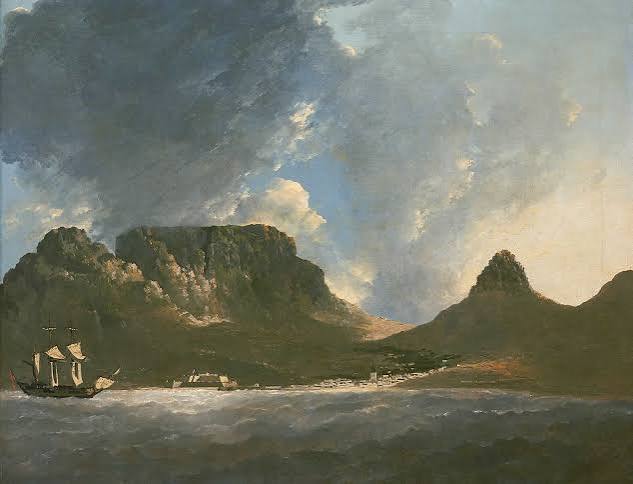
Let’s hear it for our guest of honor, Captain James Cook, here at Cape Town on his fourth visit en route to the Pacific.
This place dubbed “Tavern of the Seas” is the center point, the half-way stop from the British Isles and northern Europe to the Indian and Pacific Oceans via a journey along the African coast.
Cook sits with Dutch Governor Baron Joachim van Plettenberg, who lavishes every bit of luxury he can on this European celebrity. The two men exchange updates on the latest scientific expeditions, many of which pause here Cape Town for refitting and resupplying.
After the dinner ends, Cook will have to muster his strength to talk with a long line of people who know of his exploits. Cook is the center of attention in Cape Town. He doesn’t know it, but this is his last time in this remarkable place.
For You Now

Building the stories for this entry fueled my interest in the interplay between center and central.
We’re seeing the war create and re-create centers. Before the war, the British regarded a handful of people, Samuel Adams and John Hancock among them, as the center of trouble. That view shifted to Boston and then to Massachusetts and now, finally, to New York City and the Hudson River corridor. And for the past several weeks, General William Howe has regarded Washington’s army as part of the center.
George Washington has increasingly adopted that view as well, which we see in this week’s Redux. The Continental Congress shares it, in part, but also still holds to people, themselves specifically, as a key aspect of the definition—hence, no publicly known signatures at the bottom of the Declaration of Independence. There’ll be those who actually narrow the definition of people to one man, George Washington.
The center can change.
Central is at this point an equally fascinating term. For a considerable time, consent was the prevailing issue of the emerging Union. We’re seeing that along with consent, central has appeared in the state-by-state creations of state constitutions. How much will a government be centralized with its power seated in the core and also, some fear or some hope, from the top down? Does central take priority over consent? Can anything cause the central to be changed? These and many other questions like them are common in several states as autumn unfolds in 1776.
Don’t ever forget that war, perhaps the most crystallized and pressurized of human experiences, is a constant strain on the center and the central.
Center of…a space. Central to…a function. Use care to keep them distinct and mark their bearings.
Suggestion
Take a moment to consider: the center measures against everything else in a space, while the central requires a superiority toward everything else around it. Which is more sensitive to change, the center or the central?

(Your River)