Americanism Redux
October 15, your today, on the journey to the American Founding, 250 years ago, in 1776
“This is one week I’ll never forget…”
Are these your words? Thought them to yourself? Said them out loud? Kept them hovering somewhere between the thinking and the saying?
Every so often, a week comes along and SMACKS you in the face. The sting feels like it could last forever.
Of course, feeling or thinking or saying it doesn’t mean you’ll always remember it. Maybe that’s your experience, the forgetting.
Welcome to today, 250 years ago, and to Americanism Redux.

* * * * * * *
(where he is)
He couldn’t forget it if he wanted to.
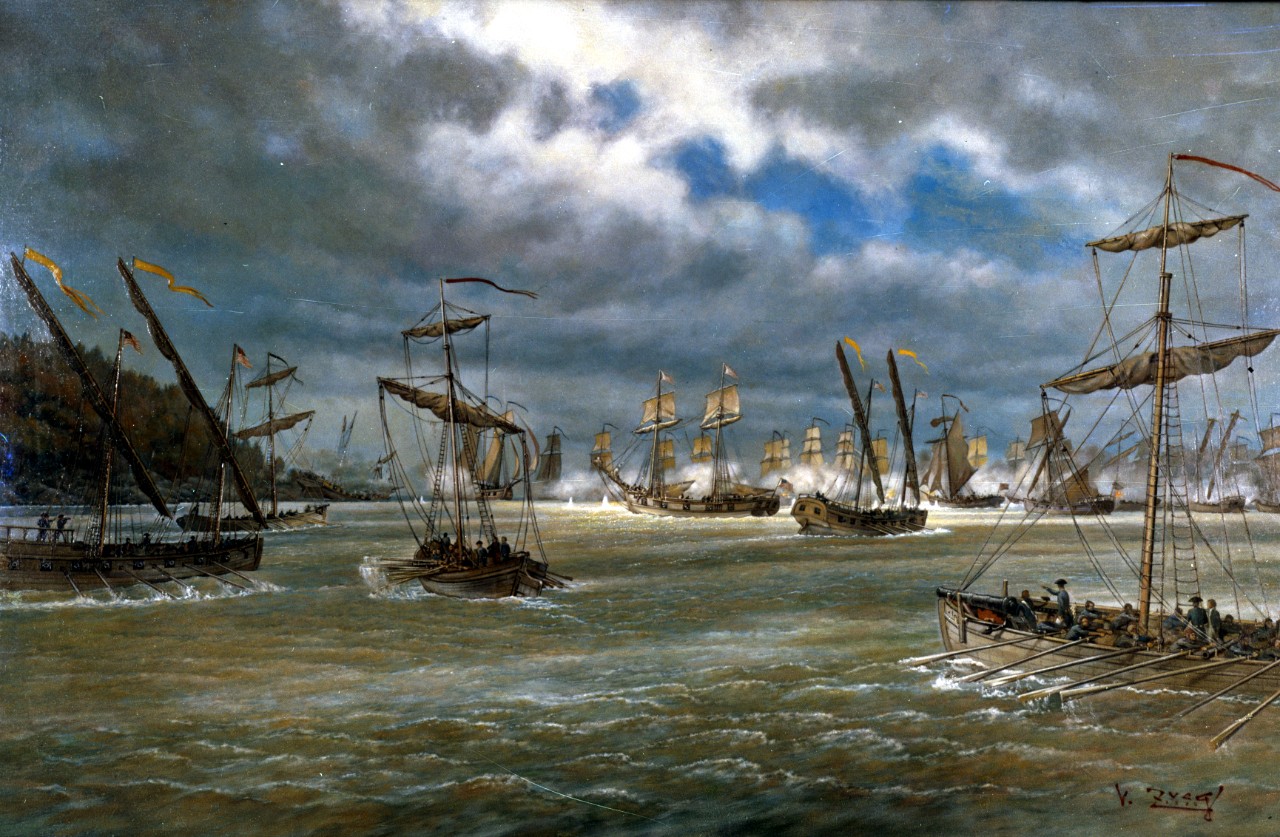
On this day—when, thank God, “nothing very strange” has happened—Jahiel Stewart lies in bed, his nerves on edge, his ears listening for unusual sounds, his body veering from tensed to drained as the black minutes tick by.
What a week it’s been.
He’s been in a small vessel fighting a running battle for two of the past four days on Lake Champlain. Jahiel has been helping load and fire cannon, paddling furiously as part of a three-man team, pulling rigging and sails in search of extra speed, firing muskets, slashing at ropes and lines with knives and axes to get free of sandbars, setting fire to the wooden walls of a fort, yelling and shouting to be heard over cries and explosions, hunching over when enemy cannonballs scream toward him, watching desperately to gauge how close enemy ships are to him, wincing when he sees doctors sawing off arms and legs, and staring as bodies, tossed overboard, float on the dark waters of Lake Champlain.
Stewart belongs to the 800 men in seventeen vessels commanded by General Benedict Arnold. They have succeeded, from this running battle, in blocking a southbound British naval advance on Lake Champlain. British General Guy Carleton decides that in the northern region winter is too close to allow for extended military operations with any hope of success. Heading back north toward Canada, he’ll wait ’til the spring thaw.
Jahiel Stewart lies uneasily in his narrow bed at American-held Fort Ticonderoga after having recorded the day’s events in his journal. Just days shy of his 26th birthday, Jahiel misses Rachel, his teenaged wife of all of ten months back in Blandford, Massachusetts. His journal is for her.
In the darkness, the journal begins a journey. Some of the words of this week drift downward to a position they’ll never relinquish. Floating bodies, cannon flashes, the sensation of danger on the choppy surface of an autumn lake, they’ll touch bottom in Jahiel’s mind. They become anchors, waiting for a heavy lift from Jahiel by himself or together with Rachel—or, as he would never have expected, by her alone, sixty years later, when she will hand the journal to a bureaucrat to justify receiving a veteran’s widow’s pension in 1837, a future reader of this week and its Battles of Valcour Island.
* * * * * * *

(modern Montreal, the jail site)
Today, 250 years ago, at roughly the other end of the northern waterway connecting to Lake Champlain, Alexandre Pochard sits in a jail cell in Montreal. He’s in the midst of a fourth week in that dark, dreary stone confinement.
His crime? He’s linked to a losing side.
Pochard is a writer working for a French-language newspaper underwritten by the American Union’s Continental Congress in Philadelphia. The plan was to have a Canadian media outlet producing American content—Thomas Paine’s “Common Sense” is a hallmark publication of a few days ago—in conjunction with a successful American “friendly” invasion of Canada to secure a 14th state. The goal was a two-pronged assault: information about the American Union’s philosophy, framework, and policies combined with an on-the-ground showcasing of the Union’s definition of a citizen-based armed force. Well, the plan failed, the British reasserted their control of Canada, the newspaper’s printing equipment has been plundered, and Pochard sits in a jail cell as punishment for his work/crime.
He’s thinking an offer could spring him: get a release from jail in exchange for going to England. Before then, however, he’s using his writing skills a final time in Montreal—penning a letter to Benjamin Franklin this week, who himself will be leaving for France soon as a member of the Union’s first diplomatic corps. A year ago, Pochard had delivered a copy of Emer de Vattel’s “The Law of Nations” to the Pennsylvania delegate.
Pochard points to not only Paine’s work but also a summation of recent events, which he’s written and seems a Canadian version of Stewart’s journal. These writings describe “those children of the Hebrews whom their parents carefully concealed to save them from the fury of the tyrant of Egypt.” In a coincidence he’ll never know, Pochard’s remark fits perfectly with Franklin’s month-old version of a Union seal that highlights the story of Exodus.
Pochard concludes, “I have spent my ink in support of your cause; I would have shed my blood had I believed it necessary for the success of the children of virtue and liberty…may I work…to persuade the Canadians that their conquerors are their greatest friends…Posterity will place your name beside those of Pompey, Brutus, and Cato.”
Pochard hopes it’s his last week in the Montreal jail. Wherever he goes, he’ll never truly leave America and the Union. The idea of them will always fill his mind and fire his heart.
* * * * * * *

(Mary and Gold’s house)
Along the Jennings Road in Fairfield, Connecticut, Mary Silliman sits in the two-story, red-clapboard house built by her husband, Gold, on acreage the two of them call “Holland Hill”. They’re still newlyweds, really, a blended family of three boys from prior deceased spouses.
Gold Silliman is now an officer in the Continental Army and is currently away, part of the effort to block the great, moving, war-making Beast known as the “Redcoats” that is probing north and east of New York City to find a landing zone, smash into Washington’s scattered Continental Army, and deliver the death blow to the Union cause. Latest reports hint of a battle at Throg’s Point. Shockingly in light of their recent disasters, a Continental force at Throg’s actually succeeded in deflecting the British advancement further northeastward. Mary doesn’t know it, but her husband Gold’s 1st Connecticut Regiment was not far from the action. For the moment, it’s quiet again as the Beast lumbers onward in search of vulnerable Union blood.
Mary also doesn’t know that the world around Holland Hill is on the edge of a deep, dark pit. Connecticut’s Governor Jonathan Trumbull Sr is convinced that Loyalist irregular Robert Rogers has organized bands of irregulars to sweep into Long Island and southern Connecticut to seize livestock, burn property, and capture or kill whoever gets in the way—in the name of the king, of course. Trumbull has met with Henry Beekman Livingston, an emerging American irregular with both land and sea experience, to set up Livingston as a counter-Rogers.
It’s up to Mary to keep the boys safe, work with servants, tend the crops and garden, and keep the whole family enterprise intact while praying for Gold’s return and staying up to date on the latest alarms and emergencies surrounding Holland Hill.
Soon, the dogs will bark and it won’t be at rabbits. A galloping horse and rider won’t come with a friendly wave from a neighbor. The glow of light and smell of smoke out by the barns won’t be started by a worker. Instead, the Beast and all its assorted bands of irregulars will be racing toward her home.
* * * * * * *
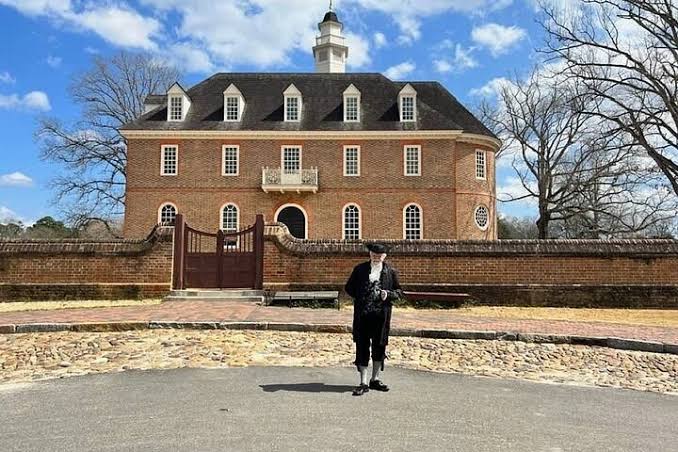
(Williamsburg)
Mary and Gold’s house is roughly 450 miles from Williamsburg, Virginia, where Thomas Jefferson and Edmund Pendleton are in a strong disagreement. The distance more closely resembles Pluto to Mercury when you factor in the topic of this week’s dispute between the two Virginians. It’s not about soldiers, war, violence, and bloodshed. It’s about citizens, who we want, why we want them, and how we decide to say yes or no on making them one of us.
They’re at odds over a bill proposed in Virginia’s new Assembly “for the Naturalization of Foreigners”. The crux of disagreement appears in the first line when Pendleton wrote “Foreign Protestants”, which Jefferson widened out to “Foreigners”, and then expanded again simply to “Persons.” They see different visions in defining new Americans; Pendleton’s is narrow and Jefferson’s is broad. Still, the two men do agree on inclusion of a phrase that guarantees “Rights, privileges, and immunities civil and religious of this Commonwealth, as if born therein” and requiring the recitation of an oath attesting to loyalty and obedience of laws. On his own, Jefferson adds that if overseas travel is needed for this new American, compensation in the form of twenty dollars and fifty acres of unimproved land should be offered.
Though the Assembly delays final voting of the bill, the very fact of writing, debating, and editing its contents makes this a week well worth remembering. The unanswered question is whether memory of the week can withstand the waging of war and the condition it’s in coming out the other side.
* * * * * * *

(Paca’s house)
Like Thomas Jefferson, William Paca of Annapolis, Maryland, is a signer of the Declaration whose identity as a signer remains a secret kept from the public. Paca is a delegate again, this time at the State House in Annapolis working on Maryland’s new constitution. He’s taking a few days away to attend to another of Maryland’s most important steps of fall, 1776. Serving essentially as the improvisational “Secretary of the (Maryland State) Navy,” Paca is with a group of delegates a short distance from the State House. Paca’s group is in charge of overseeing the outfitting of a ship seized from Virginia’s imperial governor Lord Dunmore and converted into a Maryland naval vessel. Renamed the “Resolution”, the ship is part of a plan to send agricultural goods to the West Indies and exchange them for war supplies to carry back to the Chesapeake region. Should the Chesapeake Bay see a return of war like that unfolding in Long Island Sound, Paca will do his all to have Maryland’s navy ready to fight.
As of today, though, Paca is back at the picturesque State House in Annapolis, a few hundred yards from the Chesapeake. He’s done with naval duties for the moment and dives back into sober debates over Maryland’s proposed new government. The week is a blur of days and the work is hard to divide. Paca leans forward in his seat to catch the latest constitutional arguments on powers, participants, and responsibilities within government.
* * * * * * *

(Dickinson’s house)
In Philadelphia, John Dickinson, who refused to vote for the Declaration and left the Continental Congress in expression of his opposition, is increasingly upset over the Pennsylvania Constitution that’s been completed and in circulation across the public. It’s far too radical for him and, he believes, for the betterment of the American Union. He detests the inclusion of a single house of government, the absence of any real check on its power, and the broad allowance of people eligible to be elected to office.
He’s also been asked by Samuel Chase of Maryland, a colleague of William Paca’s, to analyze the outlines of ideas under consideration for Maryland’s proposed constitution. In addition, he’s interacting with Thomas McKean of Delaware in order to identify potential adaptations from that state’s new constitution. That’s an amazing thing, when you think of it: an active rejector of the Declaration now having direct or indirect connections to the proposed constitutions of three states. These intersections only heat up Dickinson’s determination to alter the direction of the single document he can best change, the Pennsylvania Constitution, the keystone of the Union’s structure.
The man whom Union supporters roundly condemned is in the midst of a comeback week.
* * * * * * *

(the river of meeting)
Two men reflect on their surprise meeting last night on the banks of the Broad River in western North Carolina.
One of the men is Colonel William Christian. He’s in command of about 2,000 men, depending on who’s counting. He didn’t expect to meet Raven Warrior, a clan chief of the Cherokee, who’d suddenly shown up in an effort to start diplomatic talks with Christian. Christian is unflinching in his decision to continue marching toward Cherokee Over Hill towns. Once there, he’ll destroy them. Until then, he’s staying hyper-vigilant in guarding against surprise attacks by Natives. He listened to Raven, but doubts that the Native leader’s influence extends much beyond his own village. These are the merest of details, nothing more—Christian’s view is war today, war tomorrow, war unceasing until our mission has been accomplished.
The other man, now a few miles away from Christian’s encampment, is Savanukah, holding the title “Raven of Chota”. He knows that a line was crossed recently: it was the line between war against the American settlers, a conflict he supported, and the demonstrated reality that the Natives could not prevent devastating counter-attacks by the Americans, making further conflict unsustainable for Cherokee tribes. He understands that by advocating negotiations, he endangers his own life from two directions, those who seek to kill him in combat and those who seek to kill him for his opinion.
Under such threats, his life is lucky to be worth a week’s purchase.
* * * * * * *
The nature of the week ended is the first step in the week long remembered.
Also
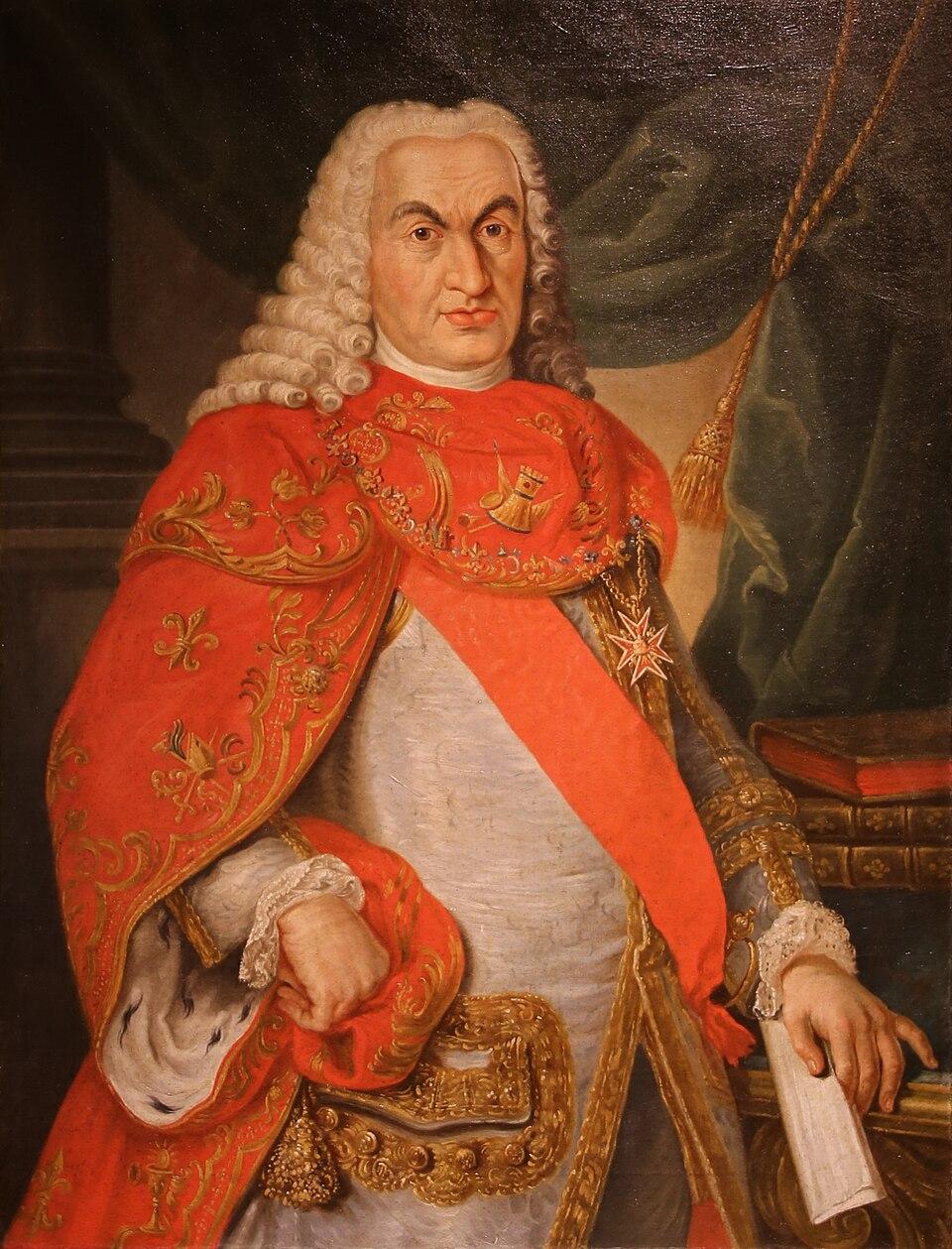
(Bernardo Tanucci)
It’s a week for reading the writing on the wall. That’s what has Bernardo Tanucci occupied these last few days. He’s getting the feeling in Naples, capital of the Kingdom of the same name, that his days are numbered in the court of Queen Maria Carolina of Austria. The greatest point of contention between them is Freemasonry. She’s for it, he’s against it, and all of Tanucci’s influence over just about every aspect of government in Naples and Sicily is at risk. He’s approaching a half-century of power and prestige in the inner workings of Bourbon and Neapolitan rule. But Tanucci and Queen Maria can’t sort out their split over Freemasonry. The 78-year-old man can’t shake the feeling that every next day could be his last in proximity to the monarchy. With the combination of long-term personal stature and near-term reputational collapse, a week, as of now, seems like a lifetime.
For You Now

I can tell you this: I’ve been thinking about Jahiel and Rachel Stewart.
They show us two things about a lasting memory. First, Jahiel’s ordeal of the running battles on Lake Champlain was an unforgettable experience. Second, his recording of that experience proved critical to his widow getting a veteran’s pension more than sixty years later. Which leaves us with this question, hence the focal point of my thinking about them: is it the experience itself or the recording of the experience that accounts for the memory? The thing that produces the memory or the method of formalizing the memory? I’ll leave it to you as to where you go with that. You likely have an example from your own life.
It’s one thing to remember a single point of time—a wedding day, a birth day, or a death day, to give a few examples. They come to us more naturally and starkly than a stretch of days, such as a week. The single event has its own form of organization, the boundaries are self-drawn. A week has many more moving parts that can rapidly disappear, leaving gaps and voids that blend and meld.
Our week can live on when it relates to something else. Unless you’re blessed enough to have a record like that made by Jahiel Stewart, you’re dependent on a connection between two or more significant points or moments. Perhaps the blending and melding that I mentioned above are in fact a form of organic connection, not an artificial sealing over emptiness.
The most expansive understanding of relationships is becoming a central finding of Americanism Redux. We’re seeing relationships INSIDE the three Union Spaces of Union House (the Union’s Continental Congress and public power), Union City (the Union’s Continental Army and armed power), and Union Home (the Union’s supporters in homes, workplaces, social places, and worship places). We’re also seeing relationships BETWEEN those three Spaces. And we’re seeing relationships of and from the Spaces to not just people BUT ALSO specific events, trends, ideas, and geographic areas.
A week you remember is the week you deeply relate to something, someone, or somewhere else.
Suggestion
Take a moment to consider: Where does this week fall for you? Has it the stuff to last for a long while in memory? Can you anticipate a week you expect to remember before it actually happens?

(Your River)