Americanism Redux
November 12, your today, on the journey to the American Founding, 250 years ago, in 1776

Two options in front of me. Both make sense and a case can be made for each.
I choose one of them.
And now, because of my choice, here we go, in this direction, with no turning back.
Welcome to today, 250 years ago, and to Americanism Redux.
* * * * * * *

(go catch one)
A pond is not far from here. The pike are biting. Take a pole and do some fishing. The burdens, the grind, will just disappear, at least for a while. Well deserved.
That’s the advice one of Nathanael Greene’s followers has given to him. 34 years old, a Rhode Islander, one-time Quaker, and prone to walking with a limp, Greene is a Continental Army General and a member of General George Washington’s “core team”. He’s also serious-minded, open to new ideas, and skilled at learning; what he’s “read and heard about” is the foundation of his rise to his current position of military leadership. Greene tends to feel the weight of the world in his approach to duty, service, and responsibility. The advice to get a pole and fish for pike truly is a great idea for him right now.
But he can’t get away. He’s consumed with the task of commanding 5,000 men split into two groups on either side of the Hudson River. 3,000 are on the east side at Fort Washington, while 2,000 are on the west at Fort Lee. The task has taken on massive weight, thanks to his boss.
Up until a few days ago, Greene’s boss was uncertain about one thing and mostly certain about another. General George Washington’s uncertainty was his view of what the enemy would do next in this part of southern New York. Washington’s semi-certainty was that he wanted to keep possession of both forts at this spot on the Hudson River. That’s changing, however, with British deserters bringing new information—the enemy is baking and distributing five days’ worth of bread to Redcoat units, while lining up boats to transport across the river and invade south into New Jersey. Washington’s now convinced the Redcoats are New Jersey-bound. He’s told Greene that, uh, it’s probably a good idea to evacuate Fort Washington since the British have shown they control use of the river. But he’s stopping at the “uh”. Instead, Washington is delegating—giving Greene free rein to make the final call because his limping, ex-Quaker, self-taught officer and Rhode Islander is closer to the situation. Washington is scheduled to arrive at the forts tomorrow.
Greene is confident. He’s been in the thick of the New York action and the heart of the core-team since late August. He believes Fort Washington can hold out against the British and also that he can evacuate his force if necessary. Greene has heard assurances from his own core-team, primarily Colonel Robert Magaw, the fort’s commander. However, Greene has also seen withdrawals succeed under challenging circumstances. He has a stockpile of what he calls “my maxims of war”—from reading, conversation, and experience counted in weeks—which include not allowing an enemy’s seizure of territory to sap the morale of an army and its public and the advantage of a force acting in defense of a position. Together, they form the pool from which Greene will draw his final decision on whether or not to keep the force at Fort Washington.
Maybe before tomorrow’s meeting, Greene can sneak away and see if he can catch pike from a different pool.
* * * * * * *

(new storm, no key)
A generation ago in Philadelphia, lightning struck a kite and an electrical current flashed down a wet string to a jar held by a doctor named Franklin. Twenty-four years later, another storm brings sparks and shocks across this Pennsylvania community. War rumbles and slashes down from the sky.
The upheaval of the past two weeks worsens in the Delaware River valley. Reports of compromised high-level political-military communications, covert operations, and rising enemy activity have darkened the region. The enemy’s success in southern New York and growing activity in New Jersey point to a drive toward eastern Pennsylvania. Fears of enemy military control have culminated in a call yesterday from the Continental Congress for emergency plans to defend Philadelphia. Members of the Pennsylvania Committee of Safety are set to identify units, equipment, command, and locations of outposts and encampments. The mood is a mix of fright, panic, and immediate urgency.
All of it pounds down on a six-week-old constitution. The people of Pennsylvania are attempting to start a fresh government after new elections. The parchment structure is radical, instituting, among other things, a one-house legislature that wipes out an upper house and a multi-member council that eliminates a single gubernatorial executive. The framework—both broadened and narrowed at the same time—must respond to the blasts of war: violence, destruction, rapid changes, and wildly fluctuating emotions in the streets, fields, and landscapes of Philadelphia and its surrounding villages and farmsteads.
The conditions of three people illustrate the disorder that threatens further descent. Peter Chevalier is one of Philadelphia’s most influential merchants, with relationships that span the east and west coasts of the Atlantic Ocean. He had emerged as a leader of a large anti-constitution faction organizing to alter practices and powers in the new document. However, suddenly, Chevalier has been ejected from his leadership position after a physical altercation. Joseph Parker has won a substantial number of votes to win a seat in the new legislature; a tailor by trade, Parker faces the massive challenge of pursuing a pro-constitution program of laws and regulations without deepening anti-constitution resistance. Finally, fellow tradesman John Baldwin, a shoemaker, sits in jail for having refused to accept Continental currency as payment in transactions. He and other currency-rejectors are regarded as criminals undermining a new social order and are suspected of supporting enemy activity. These are three Philadelphians among hundreds, perhaps thousands, running for shelter in the war-heavy air. They carry a choice—to do or not to do—in the issues, questions, and problems of the new constitution and the atmosphere of war.
* * * * * * *
(his house)
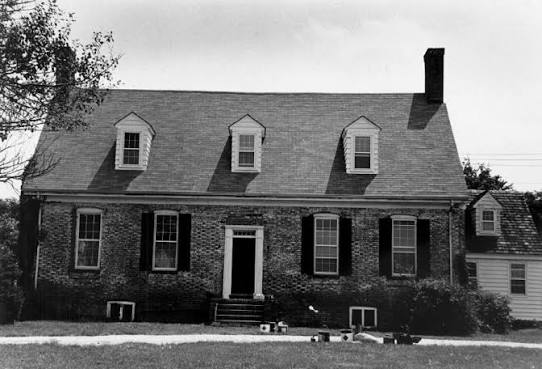
In Annapolis, Maryland, Charles Grahame, 55 years old and a delegate in finalizing Maryland’s new constitution yesterday, has a choice: serve or not serve in the new Council of Safety, where he’s been offered a seat in ushering in the next government. He decides—and it’s no.
Grahame’s no is a different form of yes. He’s saying yes to going back to his home on the Patuxent River, back to almost three thousand acres, a large mercantile and shipping enterprise, and a son who’s getting ready to choose where to go to college. Above all, he’s stepping away from the relentless pace and pressures that, if kept up, might otherwise kill him. Grahame needs time away, time on the dock that overlooks the wide river.
It was intense in the weeks-long sessions that produced the new constitution. Sharp disagreements split Grahame and the rest of the delegates. These disputes hardened into tight little groupings. Nasty feelings filled the Old Council Chamber.
Still, the discord stayed inside the building and didn’t show up in street protests or public shouting matches, like in Philadelphia. Maybe the comparative quietude reflects the fact that delegates like Grahame have a lot of common interests with others in the meetings. Or perhaps it’s that the final document allows tensions to be expressed (uniquely, forty-two declared rights are cited) along with mechanisms for filtering them (uniquely, an electoral college will select the upper house). And it’s helped that war, while a daily issue, isn’t expected to produce battles at your local doorstep.
Grahame begins his twenty-five-mile trip home with an inner sense of relief built around three letters of y-e-s.
* * * * * * *

(near the village)
On either side of a river are fifty dwellings, many made of heavy logs. The river is the Susquehanna, in the Catskill Mountains of New York. The place is Oquaga of the Haudenosaunee confederation of Native tribes, called the Six Nations by some. Four hundred people live here. Today, they’re feeling the weight of feathers and paint.
One of those dwellings holds the family of Isaac Dekayenensere. Isaac’s a respected leader in the village, a fact reflected three weeks ago when he brought in news from the surrounding woods that roaming bands of American soldiers were harassing Native men; villagers paid close attention to his account. He said that American irregular soldiers—rangers—had confronted Native hunters and demanded they wipe off their facepaint and pull bird feathers from their hair. These are treasured, longstanding features of Native life.
Bad feelings have circulated throughout the village ever since. Isaac’s neighbors interpreted the incident as yet another American attempt to erase basic aspects of Native identity. They were angry and were open to shifting the village’s allegiance toward the British.
That’s fine with Isaac. He’s a converted Christian, specifically an Anglican, a member of the Church of England. He’s been hostile to recent efforts to promote Presbyterianism in the village, which he associates with the Americans. Isaac is deeply motivated to use this latest incident with the rangers to sever connections with Americans of any fashion.
Not far from Oquaga and the Susquehanna River is Isaac’s son-in-law, Joseph Brant. Brant has been traveling at night to avoid capture since he left the British near the Hudson River. Moving west, Brant is actively recruiting Natives to fight on behalf of Britain. When Brant arrives, he’ll find a receptive audience eager to listen to his speeches, open to deciding to take a new side in the Anglo-American war. His reunion with his wife’s father will be the first step toward reviving a British-Native alliance.
Isaac will be sure to tell him about the feathers and facepaint.
* * * * * * *
(a soil of ashes)
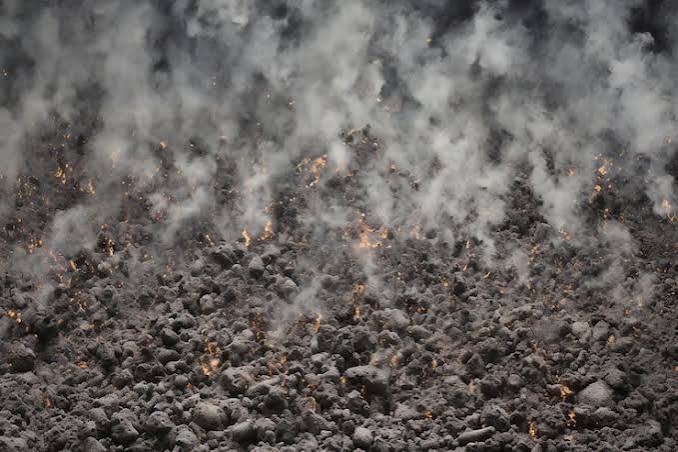
Six hundred and forty miles southwest of Oquaga, war was a choice made back in the summer. At issue today isn’t war, but rather war’s effect. Two men involved in making the choice for war back in the summer see effects they hadn’t anticipated.
Both men are officers in the three-state Virginia-North Carolina-South Carolina collaborative war against several Cherokee and Creek tribes in the Appalachian Mountains. Joseph Williams of North Carolina and William Christian of Virginia agree on war’s result—dozens of Native towns are left in smoldering ashes after total destruction by units from the three American states. They also agree on a less-than-enthusiastic outlook for the near-term future. Williams is heading home to North Carolina in semi-disgust with his men; he thinks little has been achieved other than famine, suffering, and a likely Virginian attempt to control the burned-out lands. Christian suspects some of his fellow Virginians want to reignite violence in retaliation for old grievances and wonders how they can be prevented, what the state’s authority can possibly do to hold a young and uneasy condition of non-war.
The two men’s decisions on war’s effects bring them to new rounds of difficult choices.
* * * * * * *

In every state in the American Union and Nation, life flows on. Besides war, besides numerous scenes with pieces and traces of the great struggle of the past three years, life carries forward over, in, under, and around everything in its course.
Consider South Carolina, today.
Someone from the West Indies lands at Charleston’s port. The person had learned of a shocking report by British naval commander Peter Parker. Parker claimed that during the battle of Charleston back in the spring—a battle lost by the Redcoats—several people in the American outpost were hanged, presumably as punishment for supporting the British. An unnamed person in the outpost counters the claim: it was hot that day, some people took off most of their clothes, and the wind blew the garments into the trees. From a distance, the person explained, they must have looked like people hanging from the branches.
Someone wants to purchase a young black girl, between 10 and 15 years old, who is “likely” but not necessarily “handsome.” Evidently, readers already know the distinction.
And someone loaned to another person volume one of “Newton’s Prophecies” about three or four years ago; please return it now.
The wind, the wicked, and the weirdo. Ever-present, here and anywhere else. Time moves and carries them along.
* * * * * * *
A decision drops into the current, shaping a space immediately around it. So it flows.
Also
(Burke)
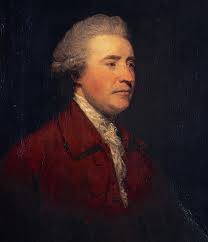
Edmund Burke is in his lodgings next to Westminster. He’s been attending and participating in sessions of Parliament’s House of Commons.
Once again, he’s voting as part of a minority, roughly one-quarter to one-third of the House. That’s the standard fraction of the body that votes in opposition to King George III’s war-based policy toward the rebellious colonies in America.
A week ago, Burke seconded a motion to have the British imperial government set the Declaration of Independence in the background. The same motion called for a reconsideration of American grievances as the center of debate and action. Another minority loss.
Lately, Burke has spoken to his colleagues in the Commons about the wisdom of learning from the late sixteenth century and the Dutch revolt against Spain’s Philip II. The Spanish monarch, Burke explained, was still willing to negotiate with his rebels even after their declaration of independence. No one accepted Burke’s argument.
Back at night in his rooms, Burke weighs the choices in front of him before tomorrow’s session at St. Stephen’s Chapel inside Westminster Palace. Rising up the list of possibilities is a studied inaction, a conscious decision to simply move on and let events unfold.
Burke will fall asleep with the choice unmade.
For You Now

Decisions tend to boil down to two options. Yes, many choices and multiple factors can exist, but life has a way of shrinking it all down to two—in or out, left or right, up or down, yes or no, and so on. Two will stand out and, from them, one is your final decision. That’s certainly what Nathanael Greene has in front of him. Go or stay.
Not only do we see various forms of the two’s, we also see their reflection of an overarching environment. War illustrates this in today’s entry. War disrupts and upends the choosing in Pennsylvania. A lack of comparable war removes such disruption in Maryland and alters the nature of the two’s. War has different effects in different places along the interior mountain ranges; everyone feels the change. What drives the exact shaping of the two may also define how quickly the implications of the final decision become clear.
Note to self: a leader will end up choosing from two, just as the two will reflect the imprint of a defining condition.
In addition, Greene’s two come to him on the receiving end of delegation (from Washington, his leader) while being on the giving end of it, too (to Magaw, his follower). He believes delegation is the right thing to do in either direction. He’ll make his decision as a result of being asked, while he’ll form his decision after asking others who follow him. Implicit in this full range of delegation is an acceptance of a great amount of responsibility for the outcome. There’ll be no fingers to point, except in the mirror.
Note to self: in getting to two, delegation runs both ways, even in the same moment.
The last two choices standing: they offer clarity and they feel restrictive. You’ll have to accept that.
Suggestion
Take a moment to consider: is there an important example right now, on a national scale, of two choices remaining?

(Your River)



Speak Your Mind
You must be logged in to post a comment.