Americanism Redux
June 18, your today, on the journey to the American Founding, 250 years ago, in 1776

They’re coming together. All the things that had popped up randomly and separately have become part of the same big thing. The moments belong to one mass of force in motion.
The hours rush, the days roll, and the size of the present blocks out almost everything else. The “almosts” are real.
You look around and wonder what will be left standing, will anything stay untouched. If you’re a leader, you’ll have little time and lots of choices. Among the latter is power, where it is, what it is, and how it is.
It’s Americanism Redux and you’re entering today, 250 years ago.

* * * * * * *

(his river)
His journey ended with a 30-mile boat ride up the Connecticut River, where he landed in Middletown, Connecticut. That was after a 3500-nautical mile ordeal from Rotterdam in northern Europe, which had been preceded by a few hundred miles from a German region.
But here he is, eager, excited, bold, confident, smart, skilled, and amazingly open to fresh relationships in Middletown, his new world. Get him to talking and chances are you’ll gain a friend inside of an hour.
He is Casper Staudt.
Staudt knows that life in Middletown, throughout the colonies, and across America is in the midst of overturning, uprooting, and reforming. He knows the British Empire here is breaking apart. He knows war has affected living and dying. He knows of real risk and vast opportunity.
A few day ago, Staudt visited with Ebenezer Watson, printer of the Connecticut Courant, the most popular newspaper-media in Connecticut. Watson is a fierce supporters of American separation and independence. The two men talk—in a thick German accent, Staudt describes himself, and with his New England English-hearing ears, Watson listens and scribbles notes. Out of the exchange comes an advertisement Watson runs in this week’s edition of the Courant.
The new immigrant is one-of-a-kind, a jewel gleaming in the salt and fresh water.
Staudt knows a secret process for making highly specialized steel from combining iron with refined salt petre and brimstone. It’s equal in quality to the best steel currently imported from German sources. In addition, he knows how to produce “Prussian blue”, the modern world’s first synthetic pigment, fetching a fortune’s price on the open market. Buyers will pay a lot for it.
Staudt, whose first name Watson writes down as “Gusper”, is himself now open for business in his new home where metals and colors are going to war.
In Staudt, the American world just received a newcomer very much at ease with revolutionary change.
* * * * * * *
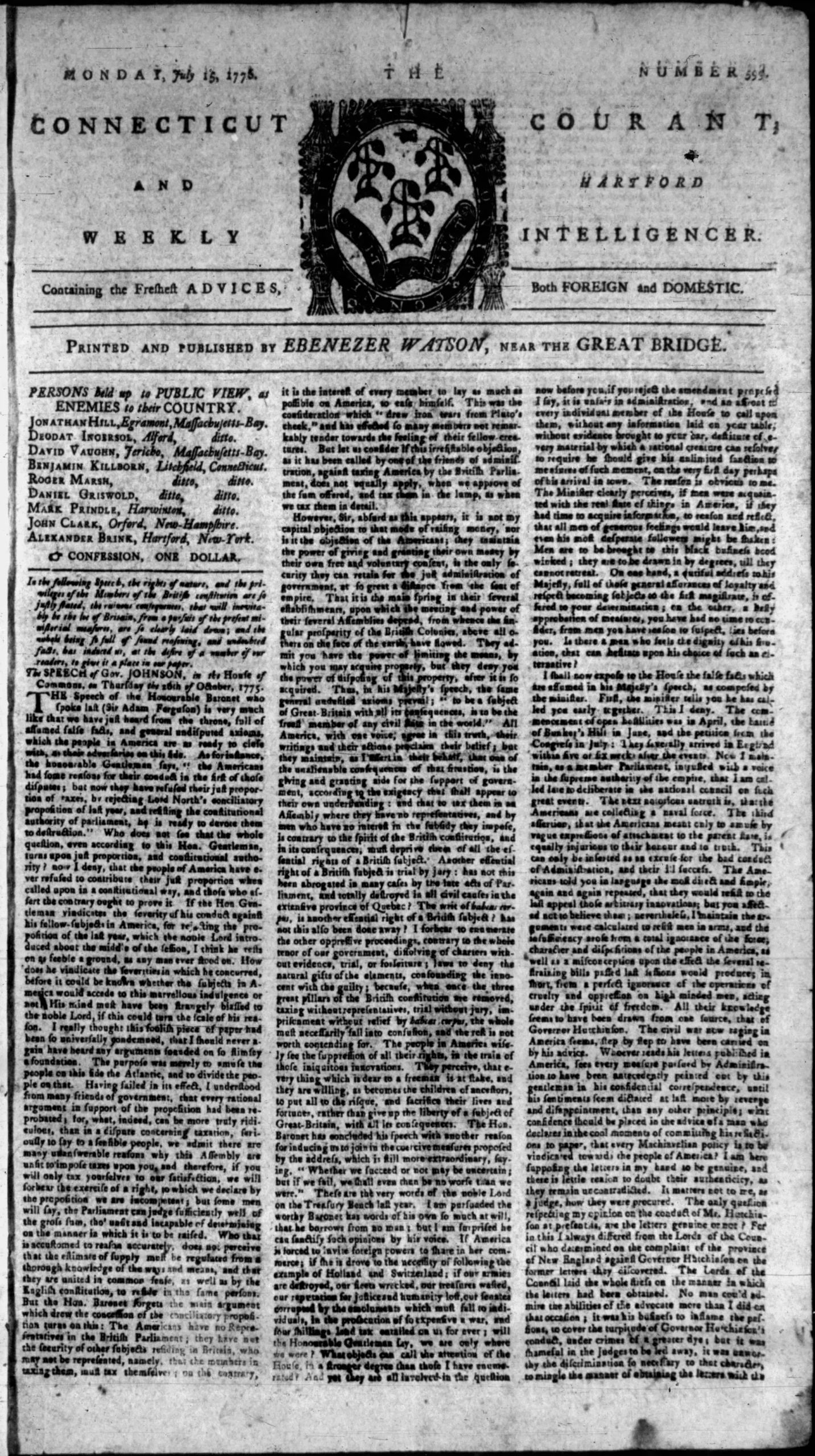
Staudt opens this week’s edition of Watson’s newspaper to find his advertisement. Before he can get there, a heart-stopping reality stares back at him from the front page.
It’s the printed agreement between British King George III and the German prince of Hesse-Kassel to rent, hire, or buy (you pick the word) men who will be shipped to America to fight for the British Empire. The agreement is one of Thomas Paine’s most effective facts that he wields like an axe in “Common Sense” to hack to pieces the need for monarchy, British or otherwise. Those German men—unfree and surrounded by a system—are not Casper Staudt.
Staudt also finds in Watson’s newspaper a chance to purchase Enos Doolittle’s artistic depictions of the April 1775 violence at Lexington, Concord, and Old Bay Road. These moments, now regarded as unleashing bloodshed in the imperial-colonial clash, are well-known to Staudt. He can deepen his understanding of them with these images, crafted by the silversmith Doolittle. They’ll affect him in a way that an English-language account never would.
But if he’s up to further mastery of his second language, Staudt will see in Watson’s newspaper two essays of major significance. Reading them will give Staudt the latest insights into his new world.
“Marcus Brutus” writes that the Continental Congress is not a legisture as currently organized. To become one, Brutus states, it must have powers that are more clearly “ascertained” and then be created through voting. That’s how it should be done in a “confederation of the united colonies.” Until then, Brutus concludes, the Continental Congress will be comprised of delegates only, not representatives. Staudt has joined a community where topics like this fill nearly every hour of every day.
The essay by “Armatus” has a statement that sizzles off the parchment page: “that this summer will decide the fate of America.”
Risk. Opportunity. Living. Dying. These are the words of summer.
* * * * * * *
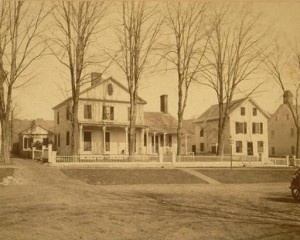
(the New Haven home)
About a day’s ride southwest of Staudt is the New Haven home of Roger Sherman. One of Connecticut’s delegates to the Continental Congress, Sherman has no knowledge of Staudt’s existence but he’s thoroughly acquainted with fellow Connecticut Americanist Ebenezer Watson, the printer of Staudt’s advertisement.
A shoemaker, surveyor, lawyer, and among the hardest-working delegates in the Continental Congress, Sherman stands on common ground with Staudt. Both are versions of what later life would say is “working-class”. Both believe that personal effort can help raise up one’s position and standard of living. Both take strong and quiet pride in not relying on aristocratic elevations and shortcuts. Both adopt the modest.
This same week that Staudt sees his advertisement in the Courant, Sherman the workhorse gets two more assignments loaded into his wagon at the Continental Congress in Philadelphia. He is the only delegate at Pennsylvania State House—the ONLY delegate—who is now serving on the Declaration committee, the new Board of War and Ordnance committee, and the new Articles of Confederation Committee.
Sherman will never boast of his uniqueness, but the truth is that he is absolutely unique in his reliability, trustworthiness, and utter lack of egocentrism.
* * * * * * *
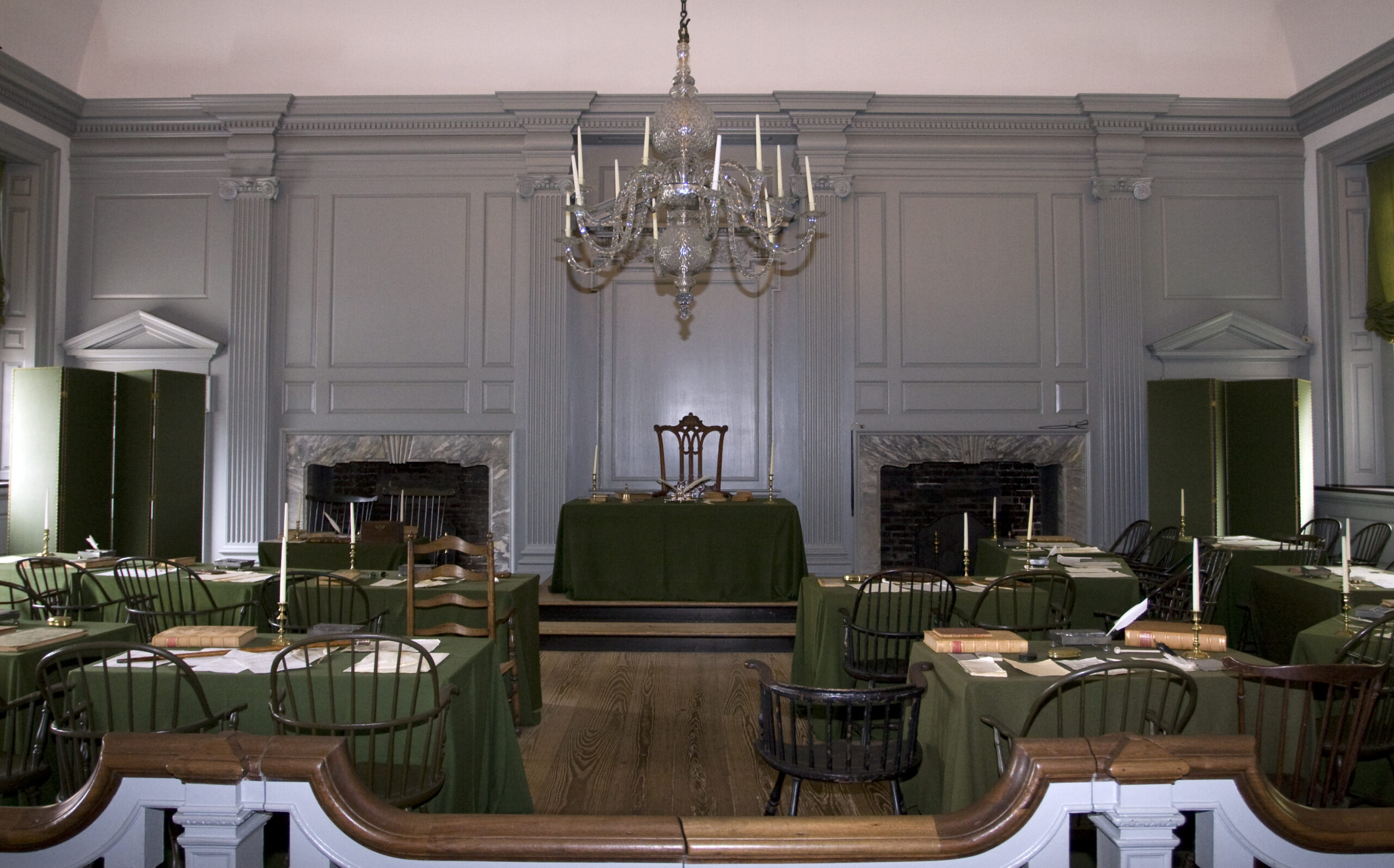
(the Union’s house, interior)
Sherman’s daily work space, the main-floor general meeting room of the Pennsylvania State House, was essentially the Union’s house, the gathering place of delegates to the Continental Congress. 250 years ago today and earlier this week, that entity, the Union’s highest, had made history, according to John Hancock of Massachusetts, its presiding officer, or preside/nt. The committees of which Sherman is a part are part of revolutionary change.
Hancock asserted that the organization of the Board of War and Ordnance is “new and great event in the History of America…It still remains, in great Measure, to erect a System of Rules and Laws, that will enable us to carry on our military Operations with more Knowledge, Certainty, and Dispatch (than before).” The Continental Army, created almost a year earlier, had been an extended arm of Union power into military affairs. The Board of War was the new joint, tendon, and ligament that would now fully control the arm.
Two weeks ago, Generals George Washington and Horatio Gates had been summoned to the Continental Congress to decide on military strategy and military structure. Now, as birth happens for the Board of War, Preside/nt John Hancock writes a summons for Washington’s counterpart in the navy, Esek Hopkins, along with two other naval commanders. They are to immediately come to explain reports of their poor conduct, ineffectiveness, and overall corruption. Fresh with life, the Board of War begins to wield its power in overseeing armed conflict and armed forces.
Speaking of Horatio Gates, the Continental Congress generally and the Board of War specifically like the idea of making him the new Continental commander in Canada. The desire to investigate and assign blame for the string of defeats there is on the verge of enactment. Many delegates are willing to grant a new “General…the powers of a Roman Dictator.” John Adams, a Gates supporter, agrees with delegates’ suspicions of military generals with power and will seek a six-month duration of the grant.
Another new committee formed on the same day as the Board of War was for the drafting of “Articles of Confederation”. As part of separation from England, the Union would shift into a full governing status through adoption of a “confederation” arrangement of its thirteen entities known up to now as colonies. This committee’s outcome is key to the belief of many people in the proper, post-separation sequencing: independence, foreign alliances, and new government.
* * * * * * *

(William Whipple)
William Whipple, a New Hampshire delegate to the Continental Congress, thinks about how to understand the blistering pace of change this week, with speeds still accelerating. He does it by drawing a line around the short-term future and then linking it back to his individual experience: “This day (the 17th) fortnight (which will be July 1st) I expect the grand question will be determined in Congress, that being the day assigned to receive the report of a Committee who are preparing the Declaration. There is as great a change here since my arrival, as there was in New Hampshire between the time that the powder was taken from the fort (at Portsmouth, December 1774) and the battle of Bunker Hill (June 1775).”
A half-year has been squeezed into a half-month.
* * * * * * *
(simultaneity’s map)
And not just in the main-floor meeting room of the Union’s house.
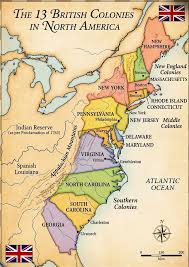
In Williamsburg, Virginia, delegates finalize the “Declaration of Rights” written by George Mason. In Annapolis, Maryland, delegates finalize instructions to the colony’s spokesmen in Philadelphia, allowing for room to accept separation and independence. In Pennsylvania, at Carpenters Hall where the Continental Congress had first met back in 1774, provincial delegates start considering language that embraces the call to adopt independence. Similar actions occur in Delaware, New Hampshire, and Connecticut.
In colony after colony, separate instances of similar natures pop to the surface. The speed of simultaneity creates an impression of inevitability. There’s danger, too, in assumptions built from appearances.
* * * * * * *

Danger also prowls New York City. Pro-British supporter Gilbert Forbes feels a strangeness in the air as he plans with two dozen others to kill key military staff in the Continental Army, plan to plant and detonate explosives in selected areas of the Union-held city, and guide Redcoat invaders into pivotal locations within Continental posts. Perhaps even General George Washington can be murdered in the effort. But something’s telling Forbes via the hairs on his neck that the situation isn’t right.
Those hairs are correct. The plot is swiftly being uncovered and the pursuit of Forbes and his plotters is about to begin.
Ironically, at practically this exact time, the Continental Congress approves a measure banning all disturbance of people who are accused of loyalism to the British Empire. They are only to be dealt with through lawfully authorized bodies in each of the thirteen colonies.
* * * * * * *
(liberty’s door?)
One of the people who voted in approval at the Continental Congress is Elbridge Gerry, a Massachusetts delegate. Gerry learns that a British officer’s letter has been captured. It outlines a plan for Redcoats to land in Florida, join with Native warriors, and together the joint force will move north up the Appalachian Mountain chain, into western Georgia, the Carolinas, and Virginia. The scale of the plan is terrifying.
The reality of executed plans is unnerving enough. To the north, Continental officer Benedict Arnold leads a beat-up, hollowed-out, and rag-tag Continental-militia force south out of Montreal, a total withdrawal from Canada.
Better news exists at the waterway called Nantasket Roads in south Boston harbor. A set of Continental and militia forces, including Major Paul Revere, have exchanged fire with eight British vessels in coastal waters. The vessels withdrew further to sea. Meanwhile, British ship transports carrying 200 Scottish Highlanders for the British Army have been seized and the men made prisoners-of-war.
Finally, in the harbor waters off Charleston, South Carolina a major battle is shaping up in the next several days for a clash between a British invasionary force and local Unionists from South Carolina. On board one of the British vessels is Sampson Waldron, an enslaved black man whose regarded as the most skillful pilot in this coastal region—you might say he’s a Casper Staudt in ship driving. He’s decided his best chance at permanent freedom is to assist the British. Nothing’s been promised about freedom, but he’s hoping that a British victory will open liberty’s door.
Amidst the smell of salt water and the sight of palmetto trees, change is coming fast, like everywhere else.
Also

A likely reader in England turns the sheet in the book and sees “200” printed at the bottom. Page 200. The reader is probably male, white, holder of an aristocratic title, a frequent visitor to London, and well-versed in Greek and Latin beyond his native English. The books he’s reading are among the newest and most urgently published books in the British Isles.
“The Wealth of Nations” by Adam Smith and “The Decline and Fall of the Roman Empire”, volume one, by Edward Gibbon.
Smith’s 200th page contains the start of his discussion of money and value: “The things which have the greatest value in use frequently have little or value in exchange; and, on the contrary, those which have the greatest value in exchange have frequently little or no value in use.”
Gibbon’s 200th page contains an explanation of how the provinces reflected the dominance of Roman language: “The language of Virgil and Cicero, though with some inevitable mixture of corruption, was so universally adopted in Africa, Spain, Gaul, Britain, and Pannonia, that the faint traces of Punic and Celtic idioms were preserved only in the mountains, or among the peasants.”
Two books, two streams of thought—the value in money and the power in words. And according to the stars and their path in the heavens, the last week of spring.
For You Now
The leadership point of this entry’s day and week is simultaneity. Since I’m not Aristotle, we’re going to go with my sense of it. We’re seeing a rate and spread of occurrences at a speed unlike anything before in Americanism Redux. The speed breaks records. So does the expanse. The condition for these record-breakings is simultaneity, a top rate of speed combined with a wide spread of occurrences.
A few thoughts here.
First, in our entry, simultaneity has a sort of unity. The rate/spread is about change. That fact pushes us to believe that change is everywhere. Fine, true enough. You see it with your eyes. I don’t doubt it for a second. In fact, I shared multiple examples of it.
Second, therein lies a warning. When simultaneity happens, hold a beat and check that the unity you think you see is genuine and sustainable. As you see in this entry, several colonies are outlining instructions for separation and independence. However—holding the beat—we need to know that Connecticut isn’t Pennsylvania, and New Hampshire isn’t Delaware, and even within the Continental Congress, diverse views exist. Beneath surface unity, the potential for friction or collision or divergence exists. Step back in your simultaneity and kick the tires.
Third, the spaces and places where things are getting done can look quite different in the present moment as opposed to how the future will remember it. Note that Whipple refers to the “Declaration committee”, not to Thomas Jefferson; Sherman is everywhere in their present and nowhere in our memory. While we’re referring to Whipple, note further that he uses his own experience to help him evaluate and assess his present—he goes back to New Hampshire in his head to crystallize his thoughts on the Pennsylvania State House surrounding him. Maybe you’ll do the same in your moment of simultaneity.
Fourth, simultaneity has loosened big chunks of power and sent them sailing through the air. Committees for the Board of War and Ordnance and for the Articles of Confederation each blaze a path of importance that will have long-run effects on the American identity. Power pervades them. Our eyes dart back and forth in amazement at the simultaneity leading to the Declaration. Their eyes are on the power inherent in the massive objects hurling through the sky.
A final point on the history. You’re reading the first-ever elevation of Casper Staudt to a level of prominence. His is a story to know and remember, an example of innovation, courage, and daring to emulate. He’ll go on to inspire a northern author to create a Staudt-ish fictional character in a prominent short story of the 1850s. You’ll also seeing credit restored to people like his new compatriot, Roger Sherman.
Simultaneity. It can direct you in revealing real change of a lasting nature. It can misdirect you in assigning endurance to a snowflake.
Suggestion
Take a moment to consider: when simultaneity happens and you remember to hold for a beat, what do you want to see?

(Your River)