Americanism Redux
August 27, Your Today, 250 years ago, in 1776

A drop began as moisture. Dampness turned to wetness across the surface. Minutes passed and a round shape pooled. Deep and dense enough to move, the drop starts a slow travel of quarter-inches.
On your face, the drop creeps down the bridge of your nose and then drips away. That’s from the heat, which has again regained its power and pervasiveness. Your clothes are soaked from beads of sweat.
Also on your face, another drop moves along a different path. Though descending like the sweat, this tear edges away from your eyes and gathers speed down your cheek. You wipe it away with the sleeve of your dampened shirt.
The drops have different sources, the heat and the heart, under night of this day, August 27, 250 years ago.

* * * * * * *
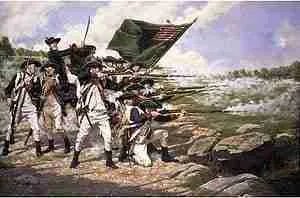
(Battle of Brooklyn)
The twenty-four hours were unlike any they’d experienced on the island called Long, next to Manhattan Island and New York City.
42-year old Caleb Parry, a lieutenant colonel from Pennsylvania, did what he’d been ordered to do along the “Heights of Guan”. Told they were facing the central power of the enemy’s attacking force, Parry and his unit stayed in their positions behind whatever barricades nature or a few hours’ work could offer: felled trees, a cannon or two, a slope. At Guan, in the earliest hours in the black of night—shortly after yesterday became today—Parry and his men heard sounds of Redcoats, who began firing on their position. Okay, here’s the attack they’d expected. Back and forth went musket vollies, fire and counter-fire, marching, and counter-marching; Parry had never seen such intense combat before. Not long after dawn, a British bullet hit Parry’s skull. A group of his men rushed to lift him up and carry him back toward Brooklyn. He was already dead by the time his unit, again immersed in the fighting, heard around 9am a massive explosive shot in the distance, four miles away, toward the Jamaica Pass.
A new part of the battle—the one neither Parry’s unit nor anyone else had expected—was beginning.
Up to then, at the Jamaica Pass, Edward Dunscombe had been in comparative peace and quiet. Sure, there were far-off sounds of gun and cannon fire, but Dunscombe, a new King’s College graduate (and friends with some of Alexander Hamilton’s college buddies), was mostly relaxed with his four comrades here at the Pass with the blue jays, cardinals, and titmouses. They’d been given a last-second assignment to guard the small road that went through the cut—the Pass—bisecting the wooded, six-mile long Jamaica Ridge. This road ran through the Pass into Brooklyn, though clearly by their own number of five no one believed it was an important route. But a few minutes ago, a little before 9am, Dunscombe’s group had started hearing a low, steady noise getting closer and closer to them until—BOOM!!—a massive explosive shot went off just out of sight. Within minutes, Dunscombe and his mates were prisoners, and 10,000 Redcoats were marching by, muskets tipped with silver-gray steel bayonets; they were the core attacking force that would smash into the American center at Guan, the one currently kept pre-occupied with a smokescreen attack. Bound with rope, Dunscombe immediately knew that the day would turn out a disaster.
Private Valentine Smith is with approximately 400 other soldiers from Maryland under the command of Colonel William Smallwood. It’s early afternoon and Smith and the rest of the Marylanders are fighting like mad dogs to withstand the unforseen DOUBLE attacks from the front and side. Smith and his fellow soldiers have been pushed about a mile off the Heights of Guan and into a large area of Gowanus and its wet ground, salt marshy soil, and countless creeks, coves, and inlets made by the Hudson River system. Some of these men are dying in the shallow lukewarm waters, sunken among the frogs, turtles, and clams. Smith himself seems destined for the same death—the salt, silt, and moss filling a gasping mouth—until a friend helps pull him out of the muck. He lives.
Upwards of 24,000 British and German soldiers have blasted apart the defenses of 10,000 American soldiers. The attackers lost 375 men, while the defenders—Parry, Dunscombe, and Smith among them—suffered 1,400 killed or wounded and another 1,100 captured. For the British, 1 of every 64 men was lost. For the Americans, 1 of 4. Most unimaginable of all, this experience has been the largest battle on the western half of the Planet Earth in the past 254 years. Not since the Spanish and Aztec empires clashed in 1521 was there a single-day scene of combat on this scale.
Of the trio mentioned here, by late night August 27, only Valentine Smith makes it back to camp, now surrounded by Redcoats on all land sides in Brooklyn, looking across the East River at New York City.
It’s a hot night ahead, of sweat and tears in an area that is reeling from a three-hour storm a few days ago and an all-day battle in the war between the British Empire and the American Union’s united States.
* * * * * * *

Prior to the battle, back closer to the storm, words were written that gain new meaning.
Three days ago, Jonathan Trumbull, governor of Connecticut, had received a request from General George Washington. The Continental commander asked the governor—it was a remark in the form of a question rather than an order—if he might be able to send 1,000 men across Long Island Sound to harass the British on Long Island. Maybe can you? The assumption is that otherwise the British may move too freely and easily from point to point on the island. Trumbull didn’t reply. Did his silence save 1,000 men from destruction? Or allow smooth British movements on Long Island and its race through the Jamaica Gap? Some of both?
John Adams wrote to Henry Knox, one of Washington’s most talented emerging subordinates. On the vital need for better pay to incoming soldiers, Adams states, “I despair of ever Succeeding, unless the General, and the officers from the Southward, should convince Gentlemen here (Continental Congress); or unless two or three horrid Defeats, should bring a more melancholy Conviction, which I expect and believe will one day, or other be the case.” His expectation was fulfilled on Long Island. Hooray.
And the two combatant generals, before the clash, said the following—to his soldiers in “General Orders” the Continental General George Washington announced, “Remember, officers and soldiers, that you are freemen, fighting for the blessings of liberty; that slavery will be your portion and that of your posterity if you do not acquit yourselves like men.” Meanwhile, the Redcoat General William Howe, communicating to New Yorkers, remarked, “All those who choose to take up arms for the restoration of order and good government within this Island, shall be disposed of in the best manner, and have every encouragement that can be expected.” One expression speaks of gaining while the other speaks of restoring. The question is which holds the ability to bounce back, to inspire, to carry on in the bad times.
* * * * * * *

(Ticonderoga)
Three hundred miles north of the chaos of Long Island is Fort Ticonderoga on southern Lake Champlain. Health conditions have been bad for weeks and show no improvements. Worse, many of the military doctors seem uninterested in doing their duty. “The United States,” writes Continental General Horatio Gates, “expect the same good service from their troops here as everywhere else. This they cannot have, unless they command the same attention to be paid the health of their soldiers here as elsewhere.” Further, Gates and twelve of his officers sign and send a petition to the Continental Congress to provide the same postal service to their region as southern officers are said to enjoy in Virginia, Georgia, and the Carolinas. To not act is to divide the two regions. Finally, those soldiers who are still healthy at Ticonderoga have lapsed into “marauding”, the stealing of goods from residents. Their conduct is costing the Union local support in northern New York without the enemy having to fire a shot.
The opposite problem is true in Georgia, according to General Charles Lee, who’s still on the southern scene. It’s not stealing by soldiers that’s upsetting, but instead local farmers charging exorbitant prices of soldiers for every item the men in uniform try to purchase. Costs have skyrocketed in the Savannah region as cash gushes into an area and a tight handful of local producers raise prices in response. Lee wonders if the Continental Congress can impose price restrictions as part of the war effort.
* * * * * * *

The “Flying Camp” was once a cornerstone of Union military strategy, a force meant to move swiftly from point to point in the greater Delaware Bay region, an agreed-upon approach at Washington’s multi-day conference with the Continental Congress almost three months ago. By nightfall today, August 27, the 10,000-man target number has resulted in less than five hundred actual soldiers in the field—New Jersey, specifically, in case the British swing south from New York City—and those totals dwindle by the day with desertions and the refusal to re-enlist after short-term service. Adding to the collapse is a constant lack of weapons and ammunition. Discouraged and increasingly unable to influence people around him, Pennsylvania’s militia General John Dickinson is planning to leave New Jersey to return to Philadelphia.
No one knows yet why it should be asked but as knowledge of the disaster on Long Island begins to spread in the coming days, a legitimate question will be this: a) would someone like Dickinson, who refused to sign the Declaration of Independence, be capable of effective military leadership out of such a setback?, and for that matter, would a populace that had chosen not to join, or stay with, the Flying Camp have the resilience to “bounce-back” after a similar calamity? Tough questions, to be sure. Maybe, for the Union, something will cause the bleeding to stop.
* * * * * * *
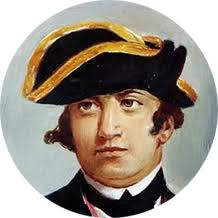
Speaking of “bouncing-back”, Esek Hopkins, commander-in-chief of the Continental Navy and effectively the counterpart to George Washington of the Continental Army, had better be sitting down when he receives the official message written today by the Continental Congress. They had spent two full days recently holding an in-person hearing of Hopkins on charges of misconduct. They found him guilty as charged and determined that he be “censured”. Now, in a turnaround of blazing speed, they’re ordering him to get a small squadron of naval vessels ready to cruise north toward Newfoundland in search of enemy ships and delivery of copies of the Declaration of Independence to local communities.
Hopkins will be under intense scrutiny for any signs of further missteps. Much of it will pivot on basic numbers and flat results—ships able, ships lost, ships captured, cargo taken, and all of it remote and apart on the deep sea. His leadership will have to adjust to the glare of harsh light and thin shadows.
* * * * * * *
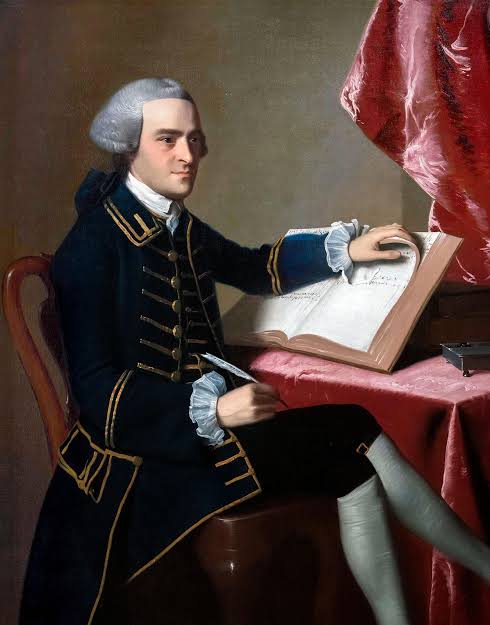
(he’s had enough of Drummond)
Also at the Continental Congress, President (or Preside/nt, as it’s called in Americanism Redux) John Hancock has finally been convinced that Lord Drummond, who had claimed to represent British imperial interests in search of a negotiated peace is at last renounced and rejected by the Continental Congress’s entire membership at Pennsylvania State House. Weeks and weeks had dragged on over whether Drummond was a legitimate envoy from London, a human stand-in for the broader question of whether war or peace was supreme in the current moment. The British invasionary force gestured an answer, and now, only hours away from early reports from Washington’s army encircled in Brooklyn at the west end of Long Island, the gesture becomes a shout, or perhaps, another kind of gesture from a finger on one hand.
* * * * * * *
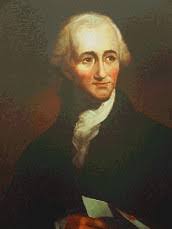
(Read)
Earlier today, August 27, around the time that Dunscombe and his four mates were bound up as prisoners and 10,000 Redcoats rushed through the Jamaica Pass, George Read joins twenty-nine other delegates at the New Castle Court House in New Castle, Delaware. They’ll begin work on the draft state constitution, to “immediately proceed to form a government on the authority of the people”. Comparable scenes are already underway in Pennsylvania and Maryland. Processes exist in North Carolina and New York, too, though the latter is in suspension because of combat. New Hampshire, Virginia, New Jersey, and a fourth state have finalized constitutions.
Will anyone like Esek Hopkins ever be tasked with transport abroad copies of what they produce?
* * * * * * *
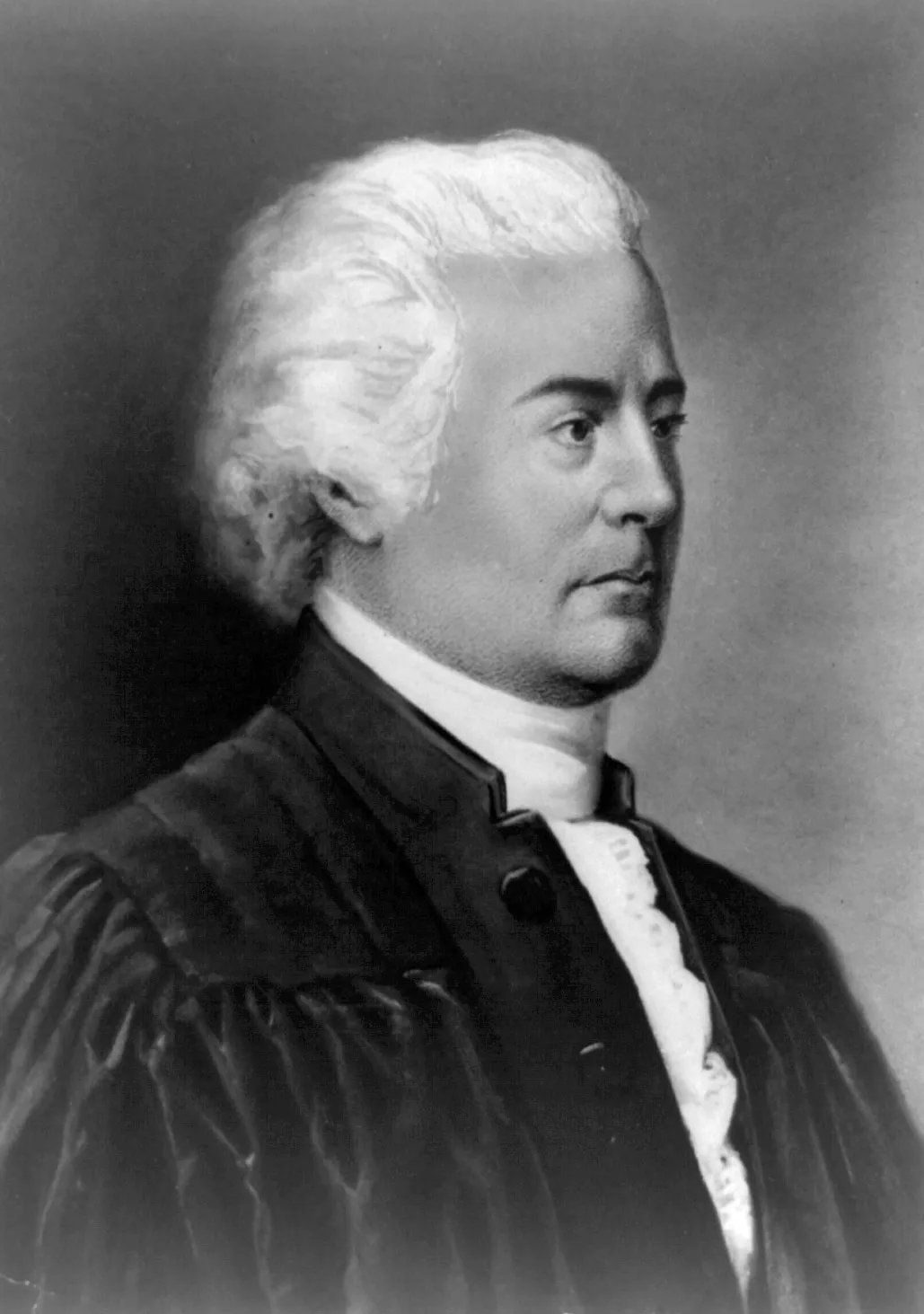
(Rutledge, audience for the unnamed author)
South Carolina is that fourth state on the list of “finalized constitutions”. But there’s been no official state endorsement of independence by vote of the state legislature. The Declaration was read publicly in Charleston three weeks ago—loud applause and lots of drinking ensued, though nothing more as of yet. Thus, action aimed at “President and Commander-in-Chief” John Rutledge (a striking title) has been taken. A few days ago a special pamphlet entitled “Observations on the Practicability of Independency” was written by an unnamed author, published by David Bruce, and addressed directly to Rutledge. Bruce combines the pamphlet with Richard Price’s popular “Observations on the Nature of Civil Liberty”, the most widely read work of the year besides Thomas Paine’s “Common Sense.” Clearly, the campaign is on to push an adoption of the Declaration by official act.
The new pamphlet’s purpose is to help the governor explain to the legislature why independence can succeed in South Carolina at this actual moment—not a philosophy but rather a cold case of facts. The customized document is a bridge between the failed British invasion of Charleston, the Declaration’s adoption by the Union, and the yet-to-be-scheduled response of the legislature on the endorsement of the Declaration locally.
In the same newspaper that reveals these careful moves among political leaders, two ads appear, one next to the other. Charles Atkins wants to buy a good dairy cow and calf. John Wells has information on selling an enslaved black mother who excels at baking pastries and running a household; her daughter can be purchased as well.
* * * * * * *
Within the Union, 760 miles separate Charleston, South Carolina and Brooklyn, New York on this late night of August 27. It’s hot everywhere, though, and not always easy to know when the moisture is from tears or sweat.
Also
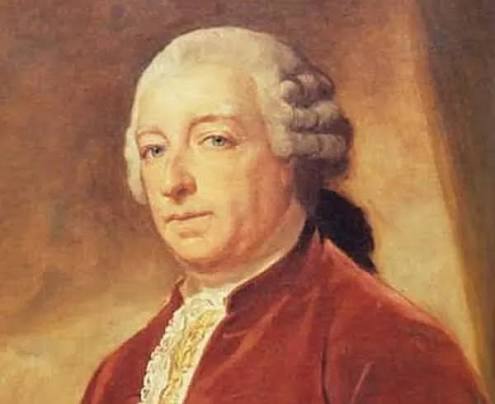
(Dr. Detail)
Earlier in the week, George Germain was in London, working in his office as Secretary of State for the Colonies and essentially overseeing the war for British King George III and his majority in Parliament.
On that single day, from his desk, Germain produces nine documents on war-related issues. The scope is astounding—from ship movements, supply status, updates on key events, reinforcement descriptions, governmental design, Native tribes, Canada, and more, in full knowledge and accounting of the time gaps in communication. He’s a personal force that breathes details, data, and information. As to philosophy, Germain devotes little time. However, dig deep enough and you’ll scratch hard surfaces of power and authority over liberty and freedom, rank over innovation, and an expectation of compliance and subordination. The world has an order and its zenith is London.
* * * * * * *
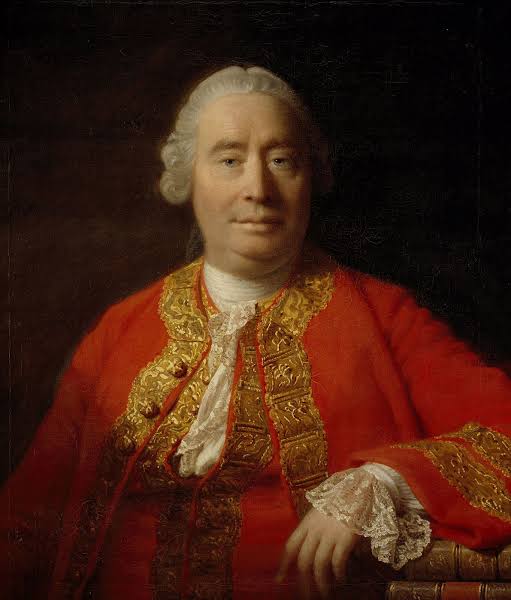
(David Hume)
David Hume dies from a tumor in his liver two days before Caleb Perry dies from a bullet to the head.
65-years old, Hume was a political philosopher from Scotland, one of the most revered and respected in the British Isles. He’d written several influential works in the 1740s and 1750s. In America, Hume’s most popular book was “History of England”, the most frequently used book in Harvard’s library, as an illustration. This book emphasized the ongoing tension in England between liberty and order—the better the balance, the better things were. Hume’s most fundamental ideas included a belief that human passions and emotions accounted for behavior before reason did; that self-interest was a driver of government; and habit and opinion exerted as much influence as rational thought in the acceptance of political authority.
Adam Smith, author of this year’s “Wealth of Nations” published back in March, has been in close contact with Hume in life’s final weeks. Richard Price, whose work had been included in the Charleston pamphlet written for John Rutledge, was also well-known to Hume, though absent in this moment.
In a fascinating aspect of the dying man’s influence in America, the three men who last week designed their individual versions of a proposed Union seal—Thomas Jefferson, John Adams, and Benjamin Franklin—were dedicated if not always agreeable readers of Hume’s works. And so too was George Read, now devoting his time to the new project of the Delaware state constitution.
The network of the dying man’s ideas stretched far.
For You Now

Off and on, I’ve referred to my three Union spaces. We’re seeing all three in sharp and stark fashion this week.
The American Union existed in three human spaces. One was Union House—or civic governing, beginning with the Continental Congress that met in Pennsylvania State but now fully emerging in various state capitals (and constitutions). A second was Union City—or armed power, embodied by the Continental Army and anywhere it is encamped or, as in this week, fighting on a scale not seen in the western hemisphere since 1522. The third was Union Home—anywhere a private space existed that was peopled by people who supported the Union, ranging from homes to churches to workplaces to street corners to docksides. Thomas Paine was an apostle of Home, and perhaps by default so too was our purposely unnamed author of the “Practicability” pamphlet in this entry. Add ’em up and you get Three Spaces of Union.
They each have their own ways, their own dynamics, their own ups and downs and ins and outs. Some things cross over from Space to Space to Space. Some don’t. The flow of time affects each Space and the relationships between each Space. Your individual leadership is one Space does not automatically transfer or translate to the same leadership in the other two Spaces.
Note my word: relationships. That’s beyond important—mega-important, uber/ultra-important, and, let’s see, really doggone important. Relationships matter when more than one applies. A person’s relationship to…another person, or a place, or a time, or an event, or a place, or, or, or. Relationships are the invisible bond inside each Space as well as between the Spaces. They are, as Lincoln will later say in only a slightly different context, mystic as chordage.
I’ve also said that three themes mark my approach to the American Revolution. Theme One is for 1774-1776, Union First and Nation Second. Theme Two, which screams off the page and screen in this entry, is for 1776-1783, War First and Independence Second. You and I can “declare” anything we want. It’s not until we act that the declaration amounts to something. Same for them 250 years ago. A Declaration? Great, have at it. But reality and for real? Well, a war has to be fought, day by day, and hopefully and sadly at the same time, won in order to make independence stick. As for Theme Three, check back with me in eight years. I’ll share it then, in 2033. Oh, and I know what it is now.
I want you to remember Caleb Parry, Edward Dunscombe, and Valentine Smith.
Suggestion
Take a moment to consider: which of the Three Spaces do you think is the most critical in the American Revolution?

(Your River)